

Attending Class Over the Airwaves
Attending Class over the Airwaves
Explore Australia’s innovative ‘School of the Air’, using HF radios and satellite technology to provide quality education to students in remote areas.
Within Australia’s vast landscape, coined the “Bush,” are remote communities whose geographical seclusion often affects essential services, including education. Pioneering a novel educational approach, the “School of the Air” has served as a beacon of hope for these distant communities. It ingeniously harnesses the power of HF radio and satellite technology to break through the tyranny of distance.
The “School of the Air”
The origins of the School of the Air date back to the 1950s, borne from the invention of Alfred Traeger’s pedal-powered radio. Initially devised for the Royal Flying Doctor Service to offer medical assistance to isolated families, the technology soon expanded into education, laying the groundwork for the School of the Air.
The Australian government, recognising the inherent right of all children to education, provides funding for this initiative. Although it costs roughly twice as much as standard education, the benefits derived, particularly in connecting isolated children with their peers and teachers, are deemed priceless.
The first School of the Air inventively simulates a remote classroom setting via radio, an approach that has continually evolved over the decades. Today, students in all Australian states except Tasmania can access real-time streaming video, high-resolution graphics, full duplex audio, two-way data interaction and application-sharing capabilities.
Satellites, linking main teaching studios with students across the country, deliver broadband service to remote areas. This technological leap proved superior for the Alice Springs School of the Air, serving 120 students scattered across an area exceeding a million square kilometres and was later implemented country wide. Thus, it diminishes reliance on the post for delivering educational materials.
Implementation of education in remote areas
At the core of this pedagogical feat is Interactive Distance Learning (IDL). Initially, the teachers utilised high-frequency (HF) radio bands, conducting lessons in real-time and overcoming the isolation barrier. Technological advancements have improved since then and now students learn over the internet, allowing them to see lessons unfold dynamically.
Teachers prepare the main lesson points in a document accessible on a website, ensuring all students receive the same quality of education. After each lesson, students complete a quiz on the same site, offering a crucial means of assessment. The immediate feedback allows teachers to measure students’ progress, identify learning gaps and tailor future lessons accordingly.
The future of radio airwaves in education
The “School of the Air” exemplifies necessity-driven innovation. It’s a testament to Australia’s commitment to ensuring education reaches every corner of its expansive landscape, no matter how remote. Leveraging technology — from HF radios to advanced satellite broadband services — provides an education lifeline to students in isolated areas This fosters their learning journey and facilitates their connection with the broader world.
While challenges persist, the School of the Air’s success provides valuable insight for other remote communities dealing with similar issues worldwide. It stands as a testament to the potential of innovation in progressing towards the goal of universal education.

Beyond the blackout: are power distributors underestimating the effectiveness of their backup communications?
When the power goes out, communication becomes everything.

Building a radio network for community-based environmental alerts
Learn how to build an HF radio network for community alerts. Explore emergency frequencies, training, and protocols to enhance disaster resilience

PACE comms strategy: Why HF radio is vital for emergency response
Choosing the right Primary, Alternate, Contingency, and Emergency (PACE) comms strategy is critical for improving the response to critical incidents.
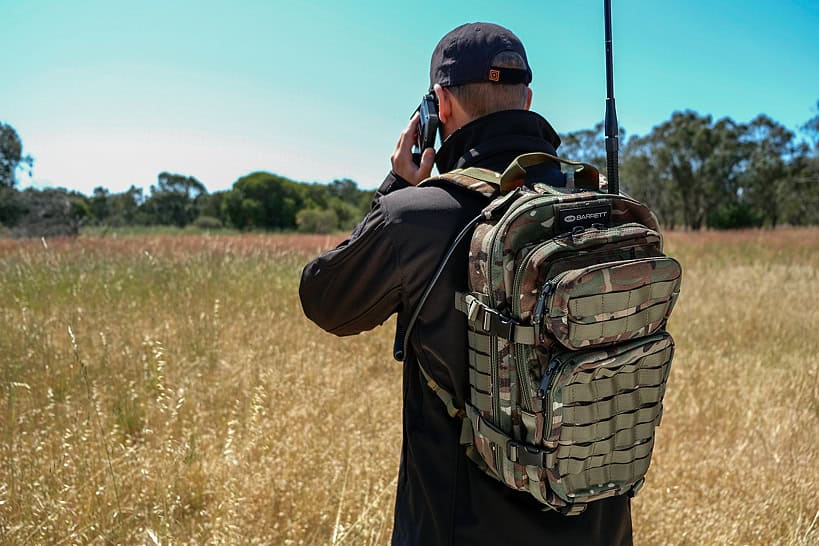
Cognitive Radio: Smart Solutions for Spectrum Congestion
The surge in demand for wireless communication has led to significant spectrum congestion. Cognitive radio technology offers a smart solution to this problem by intelligently identifying and switching to available channels, enhancing spectrum efficiency and mitigating congestion.
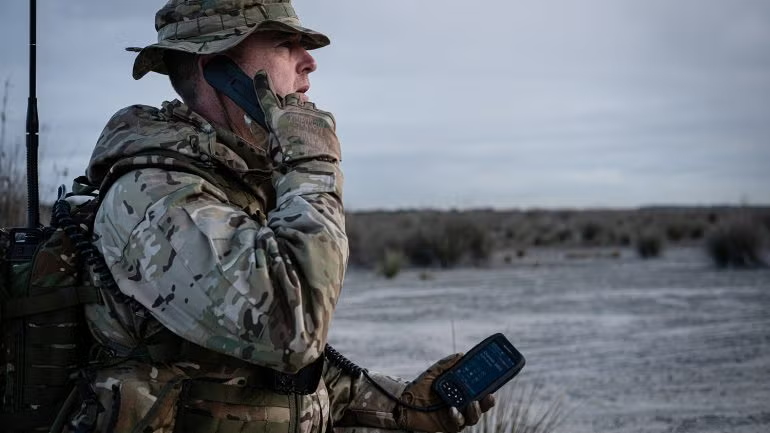
Eliminating empty zones: Why HF radio remains critical in remote desert areas
Securing reliable communications across vast desert areas that lack the necessary infrastructure can be complicated. In these so-called ‘empty zones’, which can extend for thousands of kilometres, alternative comms systems must be put in place to ensure vital personnel can remain in contact.
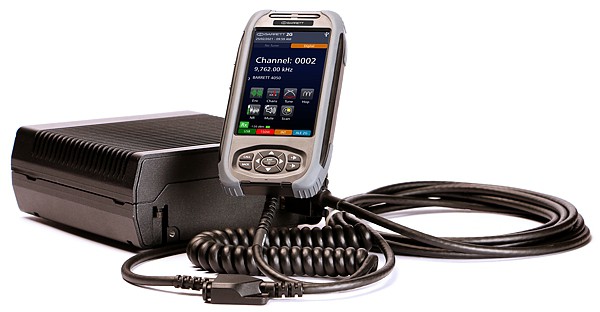
Advanced HF Radio Propagation Techniques: Mastering Long-Distance Communications
High-frequency (HF) radio wave propagation is crucial for long-distance communication.

Pingback: Barrett Radios: A look at our legacy in the field of radio communication - Barrett Communications