
Barrett Expands Range of Transportable Systems
Barrett Expands Range of Transportable Systems
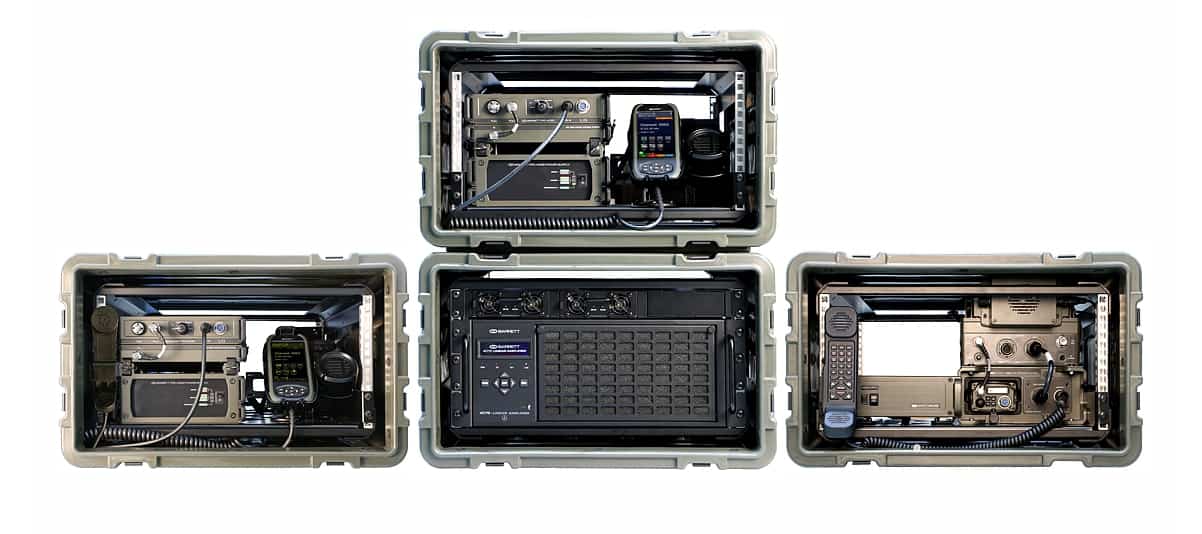
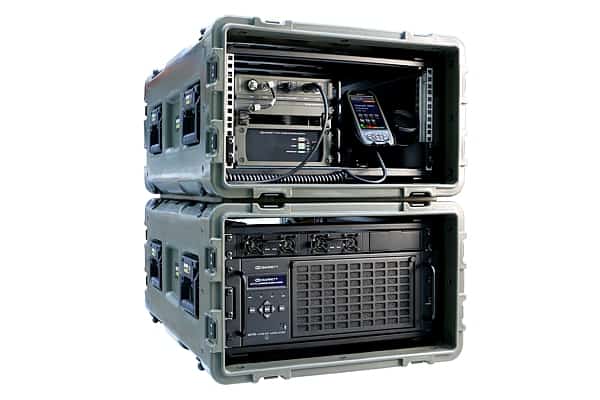
Stackable, transportable and field deployable, Barrett’s range of Rapid Field Deployment Systems (RFDS) are field proven across the globe.
In addition to the 4050 RFDS system (P/N BC405801) that offers HF and UHF/VHF crossgate operations, Barrett now offers tactical Hf and VHF transceiver and amplifier systems ready mounted in 19” 5RU rugged cases.
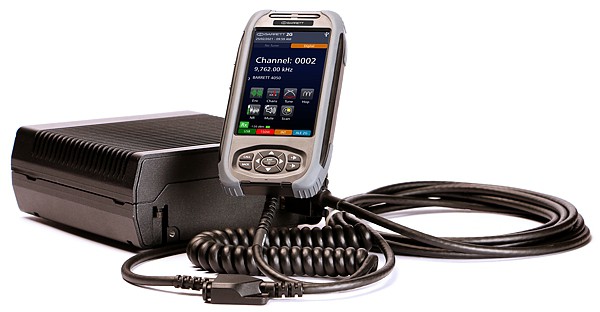
The HF solution – the PRC-4090 HF Rapid Field Deployment System (RFDS) (P/N 4090-08-01) – includes the Barrett PRC-4090 base station system, complete with its innovative and market-leading touchscreen handset and can be powered via an on-board SLA or LiFePO4 battery or AC mains power.
For added transmit power – requiring mains power connection – the entire unit can be stacked with the PRC-4075 Tactical 500W HF Amplifier (P/N 4090-08-05) to create a base station system capable of transmitting at 500W. This 500W system is available as a complete transportable base solution with the PRC-4090 RFDS (PRC-4075 Tactical 500W HF Transmitter (P/N 4090-08-10)) or singularly for use with the commercial 4050 RFDS option (P/N BC405801).
Like the HF solution, the VHF solution – PRC-2080+ VHF Rapid Field Deployment System (RFDS) (P/N 2089-08-01) – negates the time-consuming process of unpacking and configuring a base communications system in the field. Simply attach an appropriate antenna and the system is transmit ready. The PRC-2080+ VHF RFDS contains Barrett’s tactical, low-band VHF transceiver in base station configuration as well as supporting an on-board SLA or LiFePO4 battery.
For additional interoperability, both the PRC-4090 RFDS and PRC-2080+ RFDS can be modified to incorporate a 2064 Radio Voice Bridge (P/N 2064-10-10) bridging the connected HF and VHF networks.

Beyond the blackout: are power distributors underestimating the effectiveness of their backup communications?
When the power goes out, communication becomes everything.

Building a radio network for community-based environmental alerts
Learn how to build an HF radio network for community alerts. Explore emergency frequencies, training, and protocols to enhance disaster resilience

PACE comms strategy: Why HF radio is vital for emergency response
Choosing the right Primary, Alternate, Contingency, and Emergency (PACE) comms strategy is critical for improving the response to critical incidents.
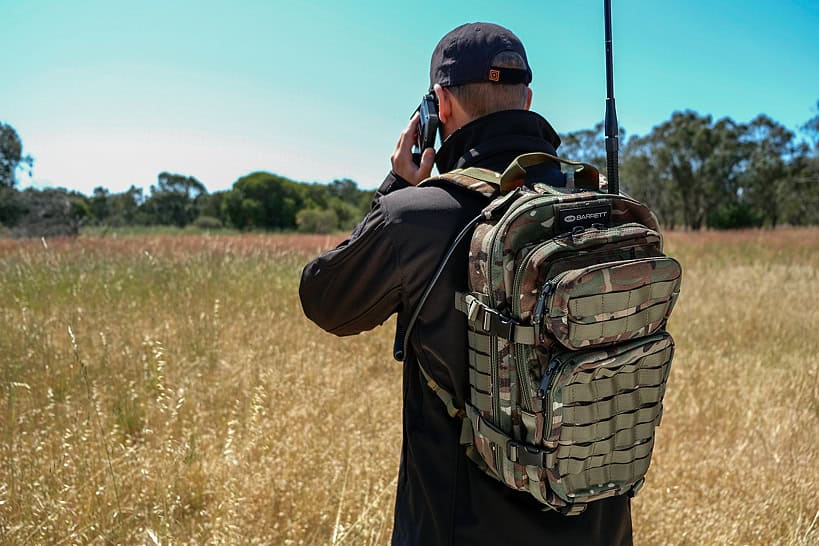
Cognitive Radio: Smart Solutions for Spectrum Congestion
The surge in demand for wireless communication has led to significant spectrum congestion. Cognitive radio technology offers a smart solution to this problem by intelligently identifying and switching to available channels, enhancing spectrum efficiency and mitigating congestion.
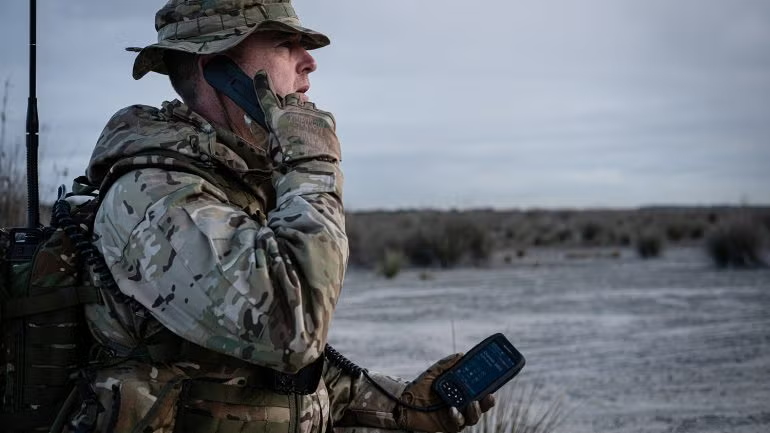
Eliminating empty zones: Why HF radio remains critical in remote desert areas
Securing reliable communications across vast desert areas that lack the necessary infrastructure can be complicated. In these so-called ‘empty zones’, which can extend for thousands of kilometres, alternative comms systems must be put in place to ensure vital personnel can remain in contact.
Advanced HF Radio Propagation Techniques: Mastering Long-Distance Communications
High-frequency (HF) radio wave propagation is crucial for long-distance communication.