
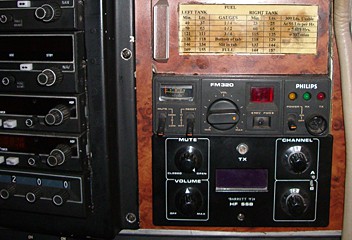
Barrett still flying high
Barrett still flying high.
Over the past 36 years, Barrett Communications has transformed from developing radios for the Australian aviation industry to designing and manufacturing communications systems for clients in over 150 countries in the humanitarian, government and defense industries. Every so often we are reminded of the humble start, as we were again recently when a Barrett F24, a single side band aircraft radio, arrived for a routine service.
The Barrett F24 was the first Barrett radio and was developed in 1982. This radio was developed to meet the then recently changed Australian Aviation Legislation which stipulated that single sideband radio communications was to be used within the aviation industry. Barrett Communications stopped manufacturing the F24 in 1992, having sold over 600 units, and continue to provide support for the product. This Barrett F24 is fitted into a 1967 Beechcraft V35 Bonanza; a fixed wing, retractable undercarriage, single engine piston aircraft owned by a local businessman in New South Wales, Australia. Our Senior Service Technician, John Stodart, commented “this radio has been around for over 25 years and is still in great condition. The aircraft is to undergo a Certificate of Airworthiness so Field Air Sales and Maintenance at Ballarat Airport, the owner’s service provider, sent the radio to us for a routine service, ensuring it continues to perform as designed”. He went on to say “this radio has undergone lengthy periods of engine vibration and large variations in temperature. The condition and performance of this piece of equipment after 25 years is a testimony to the early design and manufacturing techniques used by Barrett Communications”.

Beyond the blackout: are power distributors underestimating the effectiveness of their backup communications?
When the power goes out, communication becomes everything.

Building a radio network for community-based environmental alerts
Learn how to build an HF radio network for community alerts. Explore emergency frequencies, training, and protocols to enhance disaster resilience

PACE comms strategy: Why HF radio is vital for emergency response
Choosing the right Primary, Alternate, Contingency, and Emergency (PACE) comms strategy is critical for improving the response to critical incidents.
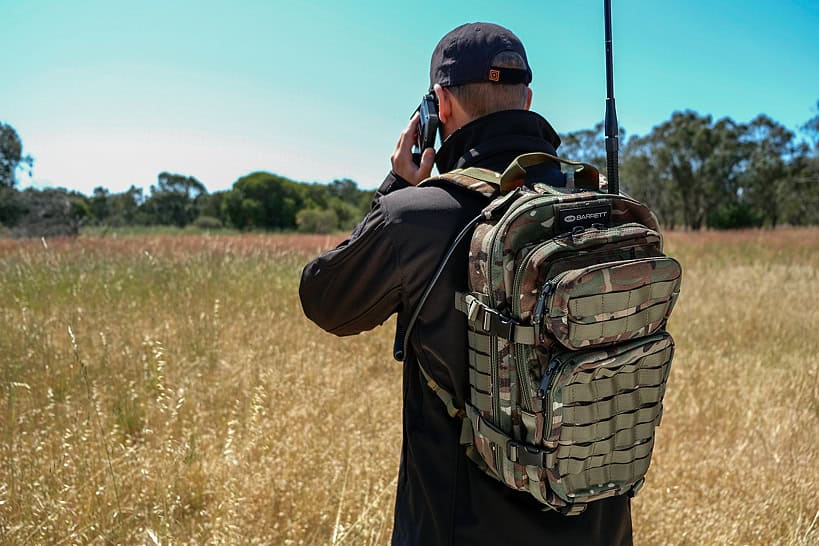
Cognitive Radio: Smart Solutions for Spectrum Congestion
The surge in demand for wireless communication has led to significant spectrum congestion. Cognitive radio technology offers a smart solution to this problem by intelligently identifying and switching to available channels, enhancing spectrum efficiency and mitigating congestion.
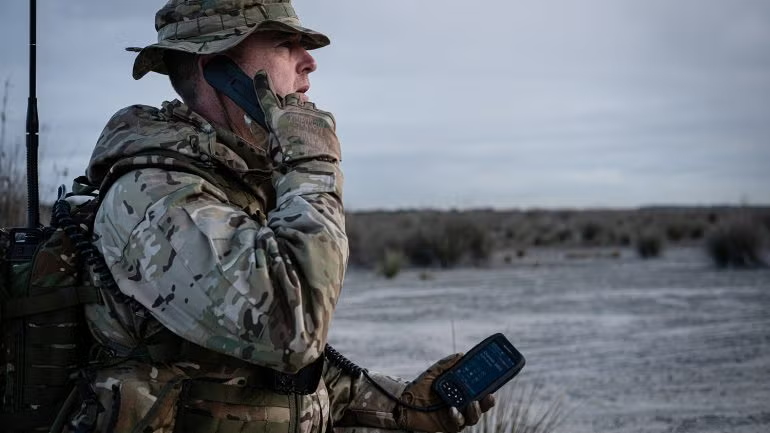
Eliminating empty zones: Why HF radio remains critical in remote desert areas
Securing reliable communications across vast desert areas that lack the necessary infrastructure can be complicated. In these so-called ‘empty zones’, which can extend for thousands of kilometres, alternative comms systems must be put in place to ensure vital personnel can remain in contact.

Advanced HF Radio Propagation Techniques: Mastering Long-Distance Communications
High-frequency (HF) radio wave propagation is crucial for long-distance communication.

Pingback: Barrett Radios: A look at our legacy in the field of radio communication - Barrett Communications