

What 3 factors does HF radio offer critical communications?
What 3 factors does HF radio offer critical communications?
In emergency situations, the ability to communicate freely and transfer data seamlessly between devices is key to mitigating damage and potentially saving lives. Critical communication situations, covering emergency response and infrastructure sectors, require key equipment that meets three demands:
1. Robustness.
2. Reliability.
3. Accuracy.
Without communications systems ticking each of these boxes, operators in the critical sector would face significantly more challenging fieldwork.
What are critical communications?
Critical communications cover any situation in which contact between different field operatives and headquarters is vital to ongoing operations. Public and private sector organisations that require uninterrupted and unambiguous information exchange include:
• Emergency response organisations. Without the ability to accurately share data on a given person’s location, field operatives will not only be less effective in aiding those in need, they may themselves become exposed to danger.
• Remote healthcare and security groups. These organisation often operate in areas without the necessary conventional communications infrastructure such as phone lines and internet coverage to maintain contact between the field and home base.
• Construction, maintenance and transportation businesses. Similar to the above, these enterprises often work in areas without existing communications infrastructure, or are required to repair damaged or compromised infrastructure.
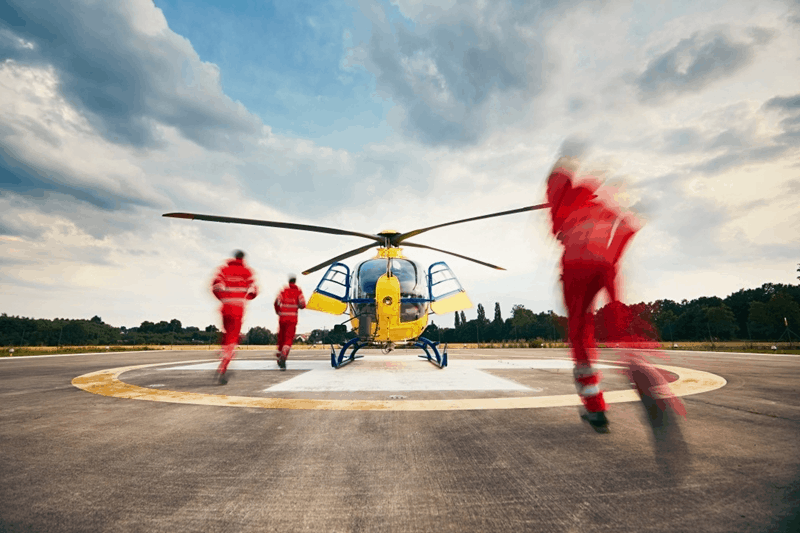
While there are numerous organisations across critical industry applications that require critical communications ability, each group is united by the same fact. In critical scenarios, there can be no compromise on continuous contact.
What three factors make HF radio the ideal critical communications system?
HF radio systems operate on the radio spectrum between 1.6 and 30 megahertz (MHz). Transceiver devices use single sideband transmission to carry radio signals as ground waves (for shorter distances) or sky waves (for long distances). This improves communication ability and data exchange speed to and within isolated locations. From manpack radios to HF units for vehicles and base station systems, all HF radio equipment has three common attributes:
1. Robustness
HF radio equipment is most commonly used in critical response and tactical sectors. As such, this communications equipment is designed with the rigours of field applications in mind. Encased within tough housing units, modern HF radio software is well protected from situations which arise in the field and from adverse weather conditions. This robust, outdoor-focused design isn’t often matched by commercial phones and smart devices.
2. Reliable
Interoperability is a key trait of leading HF equipment. Switching between different forms of radio propagation, such as ground waves for line-of-sight communication and sky waves for contact over thousands of kilometres, allows for more reliable data exchange. HF radio systems also require no other form of conventional communications infrastructure to operate. All users need is a transceiver, antenna and power supply, and they can maintain contact between themselves and other users anywhere on the planet.
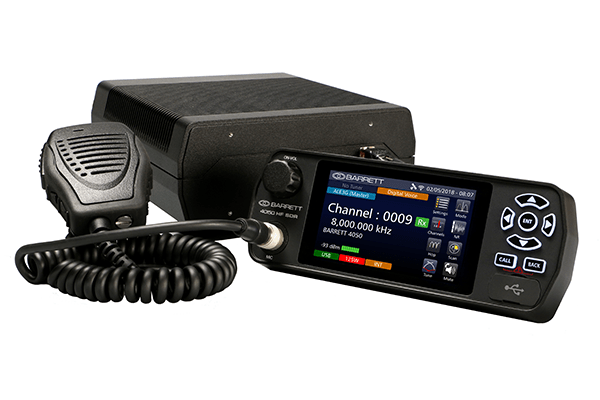
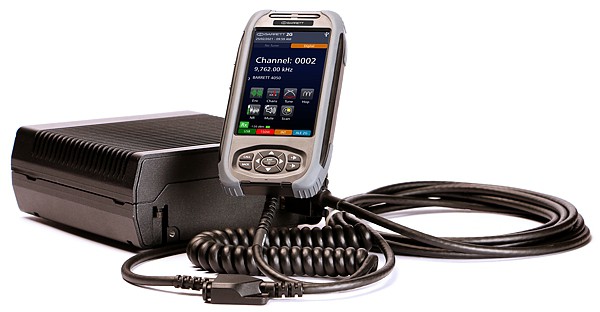
Barrett Communications’ 4050 transceiver is optimised for accurate communication and data transfer.
3. Accuracy
Digitally-defined HF radio systems, such as those the Barrett 4050 HF software defined radio, are purpose-designed with features to reduce background noise and ensure accurate data transfer. Digital signal processing reduces radio frequency interference and enhances audio for easier listening. Meanwhile, advanced calling features allow users to switch seamlessly from communications between HF radios, phones and smart devices.
Why Barrett Communications?
Barrett Communications has decades of experience in supporting a range of organisations tasked with critical response in remote locations. From managing electricity and water infrastructure in rural areas to operating search-and-rescue operations, field operatives and central headquarters need unrivalled communication ability. Without reliable equipment, entire organisations could collapse and lives could be put at risk.
Our commercial HF radio systems are top-of-the-line devices offering robust, reliable and accurate communication in all conditions. From voice applications and telephone interconnect ability to email and data transfer, we have HF radio equipment to suit your organisation. To discuss your communication needs, simply reach out to the Barrett team today.

Beyond the blackout: are power distributors underestimating the effectiveness of their backup communications?
When the power goes out, communication becomes everything.

Building a radio network for community-based environmental alerts
Learn how to build an HF radio network for community alerts. Explore emergency frequencies, training, and protocols to enhance disaster resilience

PACE comms strategy: Why HF radio is vital for emergency response
Choosing the right Primary, Alternate, Contingency, and Emergency (PACE) comms strategy is critical for improving the response to critical incidents.
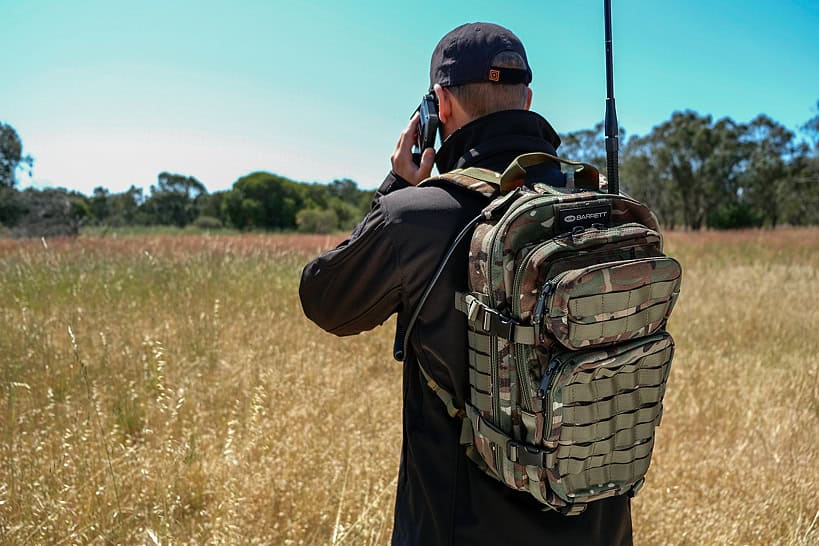
Cognitive Radio: Smart Solutions for Spectrum Congestion
The surge in demand for wireless communication has led to significant spectrum congestion. Cognitive radio technology offers a smart solution to this problem by intelligently identifying and switching to available channels, enhancing spectrum efficiency and mitigating congestion.
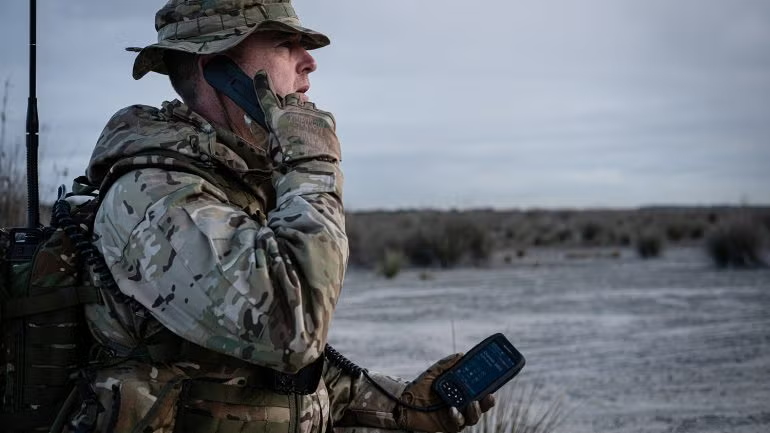
Eliminating empty zones: Why HF radio remains critical in remote desert areas
Securing reliable communications across vast desert areas that lack the necessary infrastructure can be complicated. In these so-called ‘empty zones’, which can extend for thousands of kilometres, alternative comms systems must be put in place to ensure vital personnel can remain in contact.
Advanced HF Radio Propagation Techniques: Mastering Long-Distance Communications
High-frequency (HF) radio wave propagation is crucial for long-distance communication.