
4 Ways in Which Software-Defined HF Radio has Changed the Market
4 Ways in Which Software-Defined HF Radio has Changed the Market
For years, HF radio has been the go-to for NGOs, security organisations, peacekeeping and humanitarian efforts, commercial businesses and government institutions. It has been a reliable comms medium, and weathered many a change in the communications market. However, with the advent of the internet and satellite radio options, many thought HF radio might be on its way out.
They couldn’t have been more wrong. Instead, these advances simply bolstered the strength of HF, as new HF Software-Defined Radio (SDR) transceivers were developed to incorporate an entire new generation of technology. Software Defined HF radio has itself transformed a transforming market, providing even better and more reliable connectivity when and where it’s needed most.
1. Size and weight
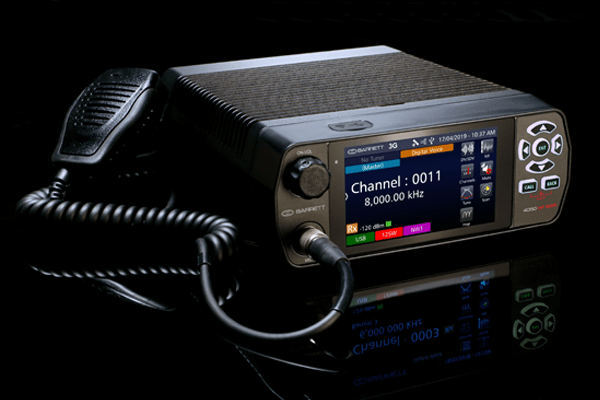
The constant battle to slim and lighten radio equipment has seen goals realised by HF SDR transceivers. With newly developed hardware and software, the size and weight has been reduced over preceding models, providing increased bandwidth with a smaller footprint than ever.
This portability is vital for use in the field when ease and speed of movement can be critical to mission success. These more compact, powerful units can be utilised either as base stations or as vehicle-borne radios for ultimate coverage and ease of use in remote areas.
2. Internet access
These latest radios are designed to provide secure digital voice, email and data transfer and can be controlled and operated from anywhere with internet access, providing telephone quality communications over an HF network. It is important to note that internet access is only required on one end of the communication line. If, for example, the base station has internet access, the person in the field doesn’t require internet access to contact the station. The radios can also be controlled from various remote platforms providing they are Internet Protocol (IP) capable.
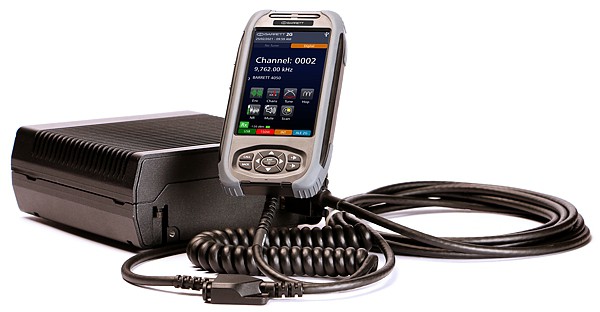
Imagine a handset “app” that can be installed on smartphones, tablets, laptops or PCs running iOS, Android or Windows. These devices can become radio handsets capable of full remote control of the radio, either locally using Wi-Fi, or from a remote location with IP connectivity.

The latest HF radios can send and receive email and data even in remote areas.
3. Digitised voice
Analogue signals transmitted over radio frequencies travel as smooth and continuous waves using an infinite tone range, but this has pitfalls. Multi-pathing or frequency overlap causes high background noise interference, which comes through as cross-channel static.
In contrast, the HF SDR setup delivers a more secure and higher quality audio experience, by using a vodocoder to transmit digitally sequenced tones representing the audio. On the receiving end, the signal is converted back. The reconstituted audio is immune to atmospheric distortion, and the sequenced tones are chosen for best possible transfer over the HF radio link.
This achieves dual goals clearer sound quality over even weak radio channels, and a level of security not available with analogue, due to the digital tones not being easily understandable.
4. User compatibility
Finally, the HF SDRs provide users the advantage of an intuitive interface that uses familiar processes. A touch screen, multi-lingual operator interface can resemble a smart phone, allowing even an inexperienced radio operator to quickly decipher how to deploy it. Icons and swiping patterns mimic usage of a mobile phone, and legacy radio controls are forward and backward compatible with multiple generations.
On the administrator side, remote access allows equipment settings and network configurations to be supported, and the entire software-defined radio setup swiftly becomes a standard piece of equipment that can be employed by any member of the team.
For more information on HF software-defined radio solutions, or if you’re looking for a reliable communications system to improve your operations, contact the Barrett Communications team today.

Beyond the blackout: are power distributors underestimating the effectiveness of their backup communications?
When the power goes out, communication becomes everything.

Building a radio network for community-based environmental alerts
Learn how to build an HF radio network for community alerts. Explore emergency frequencies, training, and protocols to enhance disaster resilience

PACE comms strategy: Why HF radio is vital for emergency response
Choosing the right Primary, Alternate, Contingency, and Emergency (PACE) comms strategy is critical for improving the response to critical incidents.
Cognitive Radio: Smart Solutions for Spectrum Congestion
The surge in demand for wireless communication has led to significant spectrum congestion. Cognitive radio technology offers a smart solution to this problem by intelligently identifying and switching to available channels, enhancing spectrum efficiency and mitigating congestion.
Eliminating empty zones: Why HF radio remains critical in remote desert areas
Securing reliable communications across vast desert areas that lack the necessary infrastructure can be complicated. In these so-called ‘empty zones’, which can extend for thousands of kilometres, alternative comms systems must be put in place to ensure vital personnel can remain in contact.
Advanced HF Radio Propagation Techniques: Mastering Long-Distance Communications
High-frequency (HF) radio wave propagation is crucial for long-distance communication.