
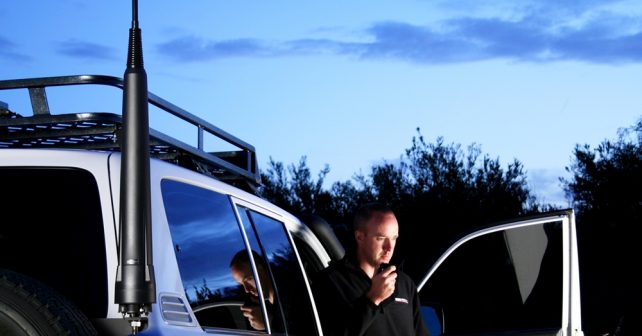
How to choose an HF mobile antenna
How to choose an HF mobile antenna
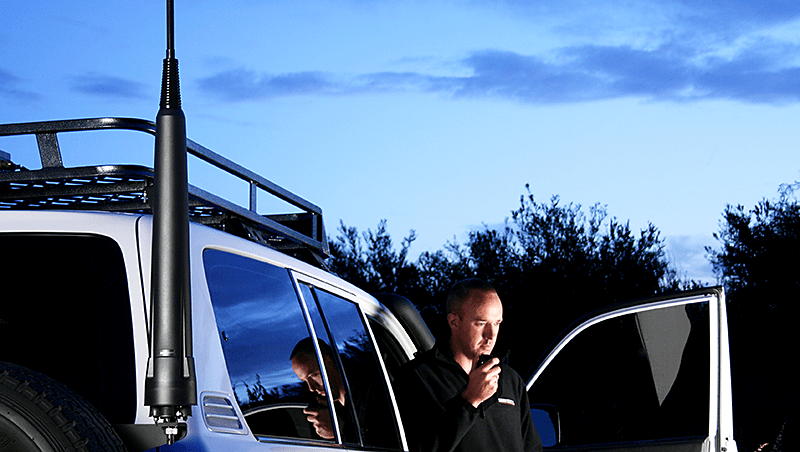
Selecting the right mobile antenna for HF radio applications is utterly crucial, as it is what enables effective transmission and reception. So, what antenna is the best choice? That depends entirely on how you’re using your HF radio system.
In this guide, we’ll take a look at three common uses for HF radio and which antenna is most suited for each.
1. In marine applications
Due to the harsh conditions of marine environments, vessel-mounted mobile HF antennas must have higher resistance to corrosion and UV exposure. Built specifically with these considerations in mind, the Barrett 917 line of marine whip antennas is an ideal choice for HF needs on the water.
Operating in all marine bands from 2 to 30 MHz, the 917 series is available in a number of sizes and mounting options to meet the needs of different vessels. The antennas and mounts are constructed from durable materials, ensuring a long operating life in tough environments.
2. In a vehicle
Vehicle-mounted HF radio systems are a key part of larger communication setups. In these cases, an antenna needs to be rugged and shock-resistant without sacrificing performance capabilities.
The Barrett 2019 automatic tuning mobile HF antenna was built for this purpose, working as a perfect companion to the Barrett 2000 series of transceivers in the 2 to 30 MHz range. This solid-state antenna features rapid tuning times of under 1.5 seconds in typical use, ensuring communication reliability.

Because the Barrett 2019 is compatible with Automatic Link Establishment (ALE) operation and designed for applications with a high duty cycle, it is well-suited for use with the Barrett 2020 email, fax and data system.
3. In unfavourable environments
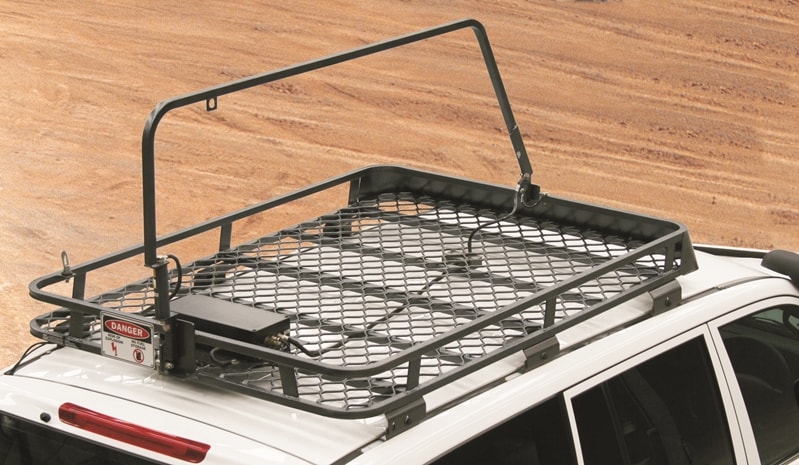
Many organisations require HF radio systems that are able to operate despite an uncooperative environment, such as in mountainous terrain or where there are high amounts of local interference or radio frequency noise. These cases call for a Near Vertical Incidence Skywave (NVIS) antenna with extra transmission and reception power – the Barrett 2018 mobile magnetic loop HF antenna.
Because mobile whip antennas have a lower radiation angle, they prove less effective in certain environments. The magnetic loop antenna, however, offers highly effective short- to medium-range communications as there is a gain of 10 to 14 decibels (dB) compared to the mobile whip antenna when correctly tuned. This roof-rack-mounted antenna is also shielded against noise interference from the vehicle, ensuring clear communication in challenging operating conditions.
There are many considerations that go into antenna selection, so the ideal route is to consult with the experts at Barrett Communications. We can help select an antenna based on which HF radio products you are using and the nature of the application itself. Contact us today for more information.

Beyond the blackout: are power distributors underestimating the effectiveness of their backup communications?
When the power goes out, communication becomes everything.

Building a radio network for community-based environmental alerts
Learn how to build an HF radio network for community alerts. Explore emergency frequencies, training, and protocols to enhance disaster resilience

PACE comms strategy: Why HF radio is vital for emergency response
Choosing the right Primary, Alternate, Contingency, and Emergency (PACE) comms strategy is critical for improving the response to critical incidents.
Cognitive Radio: Smart Solutions for Spectrum Congestion
The surge in demand for wireless communication has led to significant spectrum congestion. Cognitive radio technology offers a smart solution to this problem by intelligently identifying and switching to available channels, enhancing spectrum efficiency and mitigating congestion.
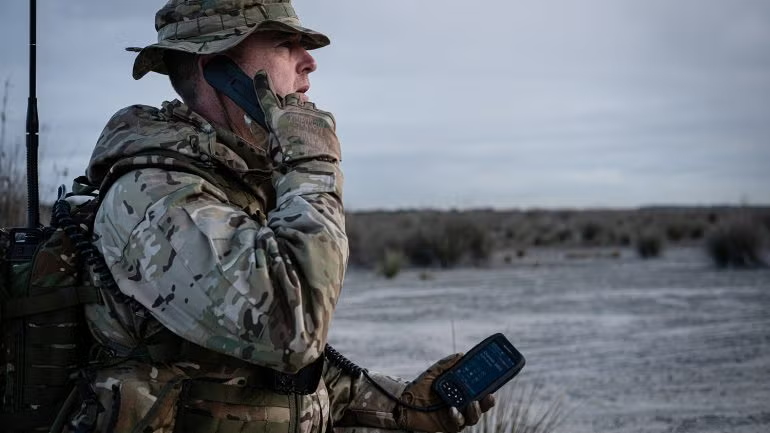
Eliminating empty zones: Why HF radio remains critical in remote desert areas
Securing reliable communications across vast desert areas that lack the necessary infrastructure can be complicated. In these so-called ‘empty zones’, which can extend for thousands of kilometres, alternative comms systems must be put in place to ensure vital personnel can remain in contact.
Advanced HF Radio Propagation Techniques: Mastering Long-Distance Communications
High-frequency (HF) radio wave propagation is crucial for long-distance communication.