

Why naval vessels would be all at sea without HF radio
Why naval vessels would be all at sea without HF radio
When it came to upgrading a critical naval asset in Oceania, it was essential to upgrade its high-frequency (HF) radio system.
To protect its citizens, regional defence forces must be well-equipped and well-maintained. When coordinating military operations, evacuations, and relief efforts, communications systems are crucial.
High-frequency (HF) radio remains as a reliable, global comms system and has been in use for over 100 years. Investing in HF was a top priority when it was time to upgrading a landing ship dock (LSD) in Oceania. However, several key operational, technological, and environmental challenges had to be overcome to ensure its new HF system was as high-performing as possible.
Why do comms system matter?
Ongoing conflict in the Middle East and Ukraine has highlighted the importance of defence maintenance and ignited a boom in the tactical comms market – market intelligence firm Global Data currently predicts the sector will be worth $25.5bn by 2033.
Often operating in remote areas at sea, a ship’s methods of communication can be limited. Satellites cannot always provide coverage in these isolated areas and could also be targeted through sabotage during a potential conflict situation.
The reduced situational awareness that arises during comms failures can result in vessels experiencing logistical difficulties, as well as safety issues due to limited access to accurate weather and shipping forecasts. A ship’s readiness potential could thus be decreased significantly, making it slower to respond in an extreme weather emergency or to any other defence missions that might arise.
Why HF radio?
An operational requirement for naval fleet communications, HF provides a communications lifeline in remote waters where satellite is not always available, VHF, and cellular signals can’t reach. Propagated by radio waves that pass through the upper level of the atmosphere, known as the ionosphere, HF provides truly global coverage. Since the ionosphere cannot be destroyed, HF radio is difficult to sabotage and can provide reliable communications in any situation.
Modern innovations such as automatic link establishment (ALE) have made the HF network 21st century-ready. Through HF, vessels beyond line of sight (BLOS) can communicate securely with other ships and stations over thousands of nautical miles, if required.

Upgrading vital HF radio systems to meet the demands of remote naval operations
Why Barrett Communications?
When it came to refitting this Oceanic naval vessel’s essential HF system, Barrett Communications was chosen as partner in the upgrade. Founded in Australia over 40 years ago, Barrett were the ideal local solutions provider, providing industry expertise and products sold in over 150 countries worldwide.
With Barrett, the ship’s HF comms capabilities were enhanced significantly. The installation of a liquid cooled system now ensures that its high-power radio systems remain operative even in high-duty cycle applications.
Moreover, the Barrett HF radio system was easy to integrate with the ship’s integrated command and control system (ICCS). Barrett’s range of high-end equipment provided good value for money by utilising a cost-effective customer off-the-shelf (COTS) solution.
Through their partnership with Barrett, the naval vessel has an updated, effective HF radio system that can ensure that the vessel remains agile in responding to defence and humanitarian missions for years to come.

Beyond the blackout: are power distributors underestimating the effectiveness of their backup communications?
When the power goes out, communication becomes everything.

Building a radio network for community-based environmental alerts
Learn how to build an HF radio network for community alerts. Explore emergency frequencies, training, and protocols to enhance disaster resilience

PACE comms strategy: Why HF radio is vital for emergency response
Choosing the right Primary, Alternate, Contingency, and Emergency (PACE) comms strategy is critical for improving the response to critical incidents.
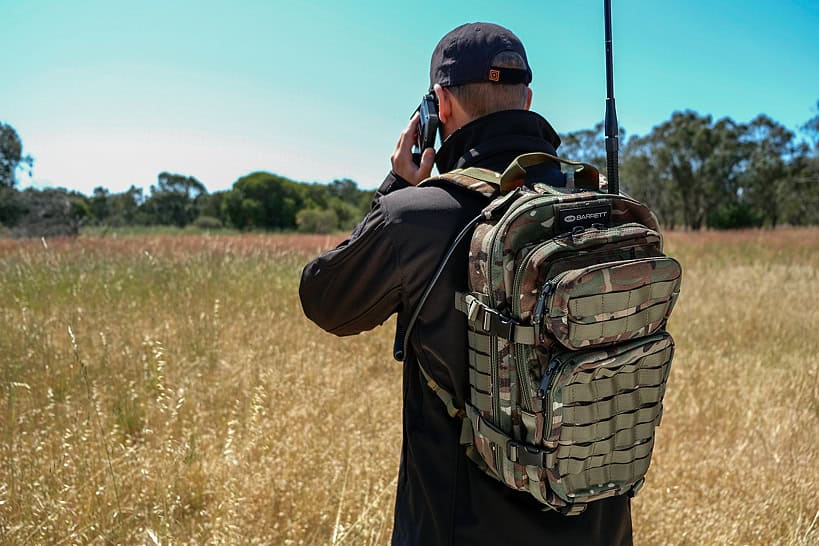
Cognitive Radio: Smart Solutions for Spectrum Congestion
The surge in demand for wireless communication has led to significant spectrum congestion. Cognitive radio technology offers a smart solution to this problem by intelligently identifying and switching to available channels, enhancing spectrum efficiency and mitigating congestion.
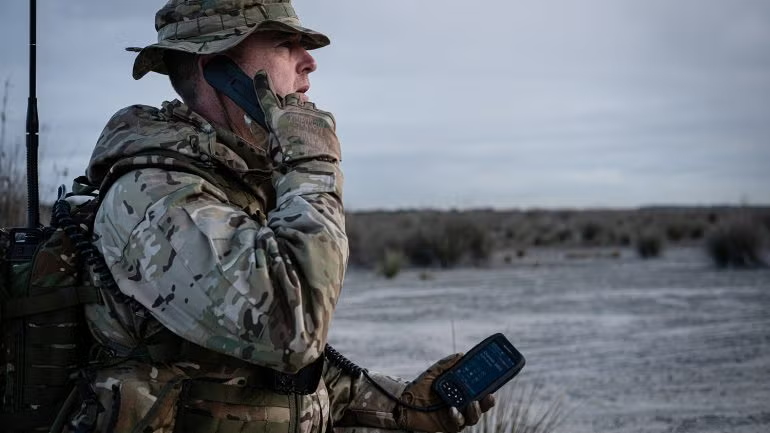
Eliminating empty zones: Why HF radio remains critical in remote desert areas
Securing reliable communications across vast desert areas that lack the necessary infrastructure can be complicated. In these so-called ‘empty zones’, which can extend for thousands of kilometres, alternative comms systems must be put in place to ensure vital personnel can remain in contact.
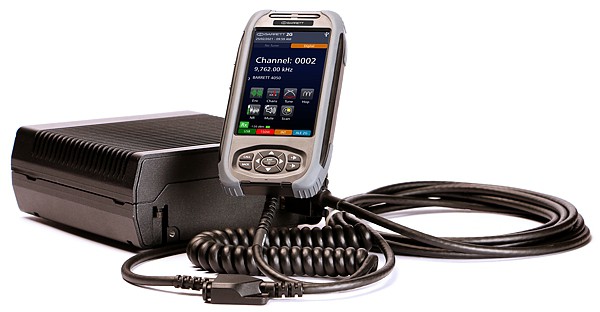
Advanced HF Radio Propagation Techniques: Mastering Long-Distance Communications
High-frequency (HF) radio wave propagation is crucial for long-distance communication.