
Does space weather impact tactical HF communications?
Does space weather impact tactical HF communications?
Space weather, according to Ready (the Australian federal government site for disaster awareness), is identified as ‘the variable conditions on the sun and in space that can influence the performance of technology on Earth’. Space weather has a variety of effects on communications infrastructure, and in extreme conditions can cut off or even completely destroy communications capabilities.
If you are in critical situation, you need to ensure that your communications equipment is robust enough to negate space weather’s potentially damaging effects. Understanding why space weather impacts tactical HF communications is important for operators in the field, as it arms them with the information they need to make equipment adjustments to ensure they can stay in touch.
HF radio waves from the 1-30 megahertz range become distorted, across various radio frequencies, during periods of space weather.
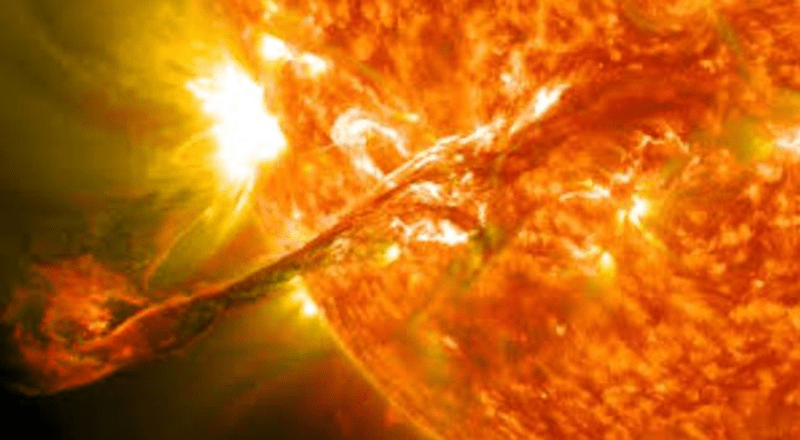
The main cause of space weather is the sun. Due to its size and relative proximity to the Earth, any sudden surge in electromagnetic or plasma activity can affect communications signals here. These events, which also include solar flares and bursts of UV radiation, are called Coronal Mass Ejections (CMEs), as per Ready.
Space weather producers electromagnetic fields which can wreak havoc on a variety of communications signals. Ready categorises space weather events into three subsections: Geomagnetic storms (that disturb Earth’s geomagnetic field), Solar Radiation storms (dangerously elevated levels of radiation) and Radio Blackouts (excess X-Rays interfering with the Earth’s ionosphere).
What is space weather, and why does it affect HF radio
The last phenomenon, Radio Blackouts, is the issue most pertinent to HF radio communications. Figuring out why space weather affects tactical HF communications is simple – when the ionosphere is severely distorted, HF radio signals are scattered or absorbed with little chance of the desired refraction back to Earth where we can receive them. Thus, tactical HF radio users need to be aware of the dangers of extreme space weather and be prepared with alternative interoperable communications.
What tactical HF radio equipment can work
The Space Weather Prediction Centre identifies that HF radio waves from the 1.6-30 MHz range become either absorbed or reflected by the ionosphere in periods of tumultuous space weather. This is largely due to the negative enhancement of the D-layer in the ionosphere, ultimately rendering your HF radio equipment unusable.
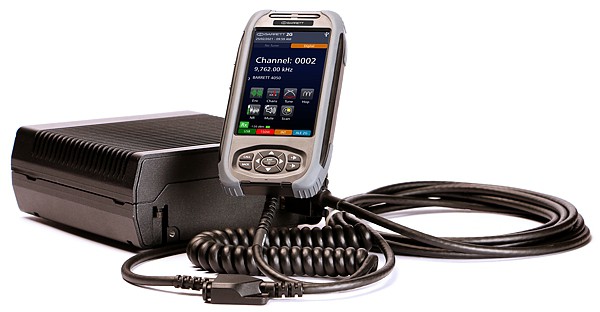
However, in tactical operations, where communications can be critical to user safety, there can be no excuse for communications failure. Yes, space weather impacts tactical HF communications – but Barrett Communications’ HF radio devices are built for communications in any conditions. The key to addressing this problem is interoperability and a reliable internal design.
• Barrett’s tactical radios are industry-noted for reliability. Radio transmission quality is heightened with the use of digital voice. Unlike traditional analogue transmissions, digital voice guarantees clearer audio in periods of difficult atmospheric conditions.
• Barrett’s range of products are designed for interoperability with other radio equipment. Should your HF radio communications fail due to unmitigable space weather, you can switch to VHF radio communications to ensure that you can still communicate locally.
Such is the power of space weather that all forms of distance communication are affected. Mobile networks and satellite connections regularly fall prey to its tumultuous effects, leaving people unprepared in the event of communications blackouts.
Barrett’s tactical range is robust and reliable for continuous communications, no matter the conditions. Our system’s interoperability offers the ability to swap HF radio parts, or switch to VHF communications seamlessly, meaning your communications will never be left in dead space. For more information about our tactical HF radios, contact the team today.
Beyond the blackout: are power distributors underestimating the effectiveness of their backup communications?
When the power goes out, communication becomes everything.

Building a radio network for community-based environmental alerts
Learn how to build an HF radio network for community alerts. Explore emergency frequencies, training, and protocols to enhance disaster resilience

PACE comms strategy: Why HF radio is vital for emergency response
Choosing the right Primary, Alternate, Contingency, and Emergency (PACE) comms strategy is critical for improving the response to critical incidents.
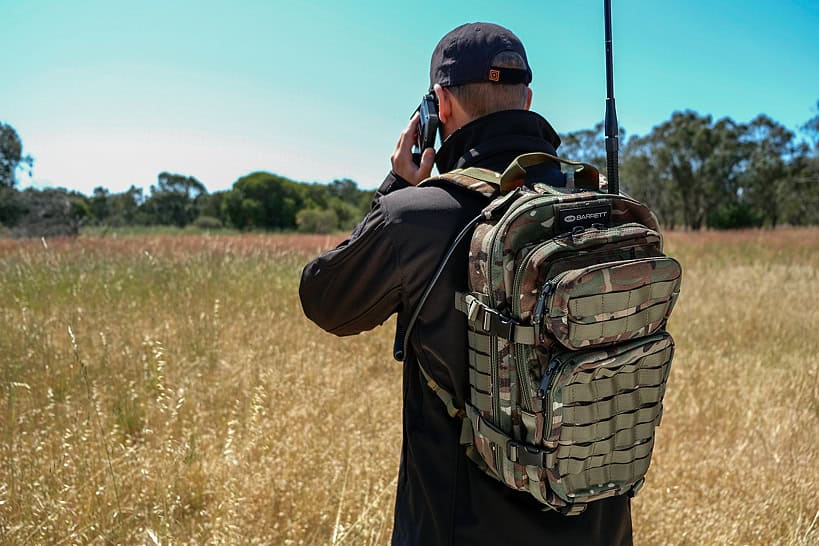
Cognitive Radio: Smart Solutions for Spectrum Congestion
The surge in demand for wireless communication has led to significant spectrum congestion. Cognitive radio technology offers a smart solution to this problem by intelligently identifying and switching to available channels, enhancing spectrum efficiency and mitigating congestion.
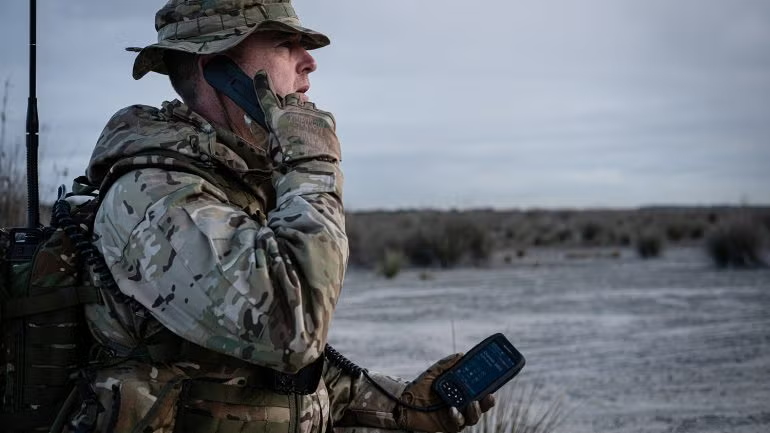
Eliminating empty zones: Why HF radio remains critical in remote desert areas
Securing reliable communications across vast desert areas that lack the necessary infrastructure can be complicated. In these so-called ‘empty zones’, which can extend for thousands of kilometres, alternative comms systems must be put in place to ensure vital personnel can remain in contact.
Advanced HF Radio Propagation Techniques: Mastering Long-Distance Communications
High-frequency (HF) radio wave propagation is crucial for long-distance communication.