

How to set up HF radio for critical comms in infrastructure
How to set up HF radio for critical comms in infrastructure
Infrastructure providers experience many advantages when using HF radio, but getting started can be a complex process.
Barrett Communications North American system integrator, John Rosica, President of NVIS Communications, walks us through how to set up HF radio for critical comms.
You’re not just going out and deciding to buy HF radios; you’re deciding to have an HF program.
1. Who do you need to connect with?
“The first thing to understand is that you’re not just going out and deciding to buy HF radios; you’re deciding to have an HF program,” John says.
“This would imply you’ve already determined there are locations or sites that need to be connected within your operational area. These could be your own sites as well as external sites or locations you need to connect to.”
Identify these sites and determine the distance between the furthest two – that shows you the maximum and minimum ranges your system must cover. This will be essential for the next steps.
2. What spectrum do you need to cover?
Your operational distance requirements will tell you what areas of the radio spectrum you will use – a longer range calls for higher frequencies.
Be sure to acquire an operating license and equipment that covers those frequencies – whether you require short- or long-range communications, or a combination of both.
3. Which antenna is most suitable?
The antenna you need will also come down to range requirements. Covering shorter distances can be done with a more compact antenna, but long distances necessitate a larger antenna or one installed higher off the ground.
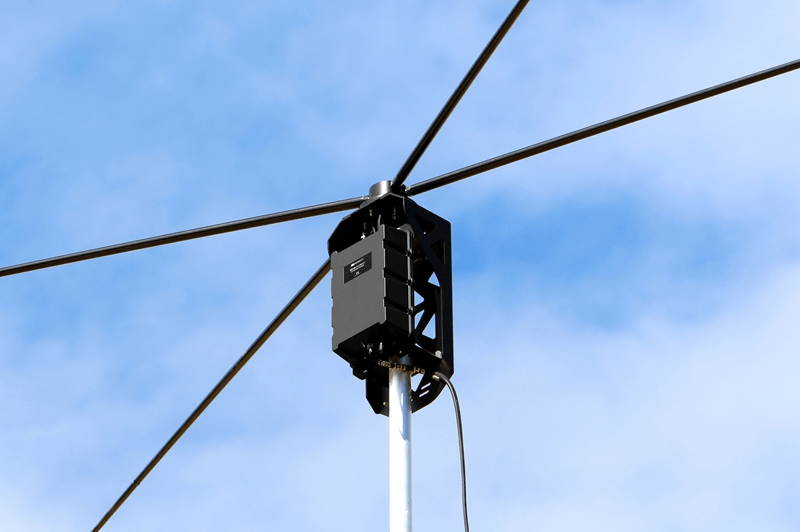
This opens up considerations regarding physical space either on a rooftop or in open areas around a potential base station – as well as nearby sources of HF noise, such as air conditioning units. Compact, powerful antennas like the ATU Horizontal Dipole suit base stations with limited space.
4. How much power will your system require?
HF radio signals degrade over longer distances, so the target coverage area will determine your power requirements.
If your communication points are within a short range, standard radios operating at 125w to 150w are sufficient. For longer distances, you’ll need more power with an integrated system of radios and amplifiers.
5. What equipment do you want?
Once you’ve determined the necessary specifications for your HF radio system, you can start looking at vendors. At this point, it’s important to have an idea of which features you’re looking for.
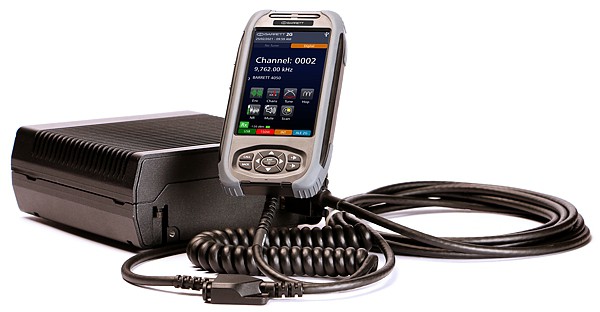
For a closer look at the capabilities of advanced equipment, watch our video on the Barrett Communications 4050 HF SDR transceiver.
When looking to install emergency communication for infrastructure providers, the right help makes all the difference. Barrett Communications has the expertise and global reach to see to your HF radio needs. Contact us today to learn more.

Beyond the blackout: are power distributors underestimating the effectiveness of their backup communications?
When the power goes out, communication becomes everything.

Building a radio network for community-based environmental alerts
Learn how to build an HF radio network for community alerts. Explore emergency frequencies, training, and protocols to enhance disaster resilience

PACE comms strategy: Why HF radio is vital for emergency response
Choosing the right Primary, Alternate, Contingency, and Emergency (PACE) comms strategy is critical for improving the response to critical incidents.
Cognitive Radio: Smart Solutions for Spectrum Congestion
The surge in demand for wireless communication has led to significant spectrum congestion. Cognitive radio technology offers a smart solution to this problem by intelligently identifying and switching to available channels, enhancing spectrum efficiency and mitigating congestion.
Eliminating empty zones: Why HF radio remains critical in remote desert areas
Securing reliable communications across vast desert areas that lack the necessary infrastructure can be complicated. In these so-called ‘empty zones’, which can extend for thousands of kilometres, alternative comms systems must be put in place to ensure vital personnel can remain in contact.
Advanced HF Radio Propagation Techniques: Mastering Long-Distance Communications
High-frequency (HF) radio wave propagation is crucial for long-distance communication.