

Why HF radio needs to be part of your disaster planning
Why HF radio needs to be part of your disaster planning
Natural disasters often come without warning. While in most cases these occur without major consequence, there’s no telling the full extent of the damage a devastating event could cause your area. For those in critical sectors, such as hospital workers or power plant technicians, it’s vital to have a communications contingency plan in place for the worst case scenario.
What makes good disaster planning?
For businesses, there are two plans that should be included in a disaster strategy. The first is a business continuity plan, which is a document outlining how business owners and employees should act in the event of a natural disaster or disruption of any sorts to communications, including how to respond when business operations are down. Secondly – and arguably more importantly – is a disaster recovery plan, demonstrating how to get the business back up and running as quickly as possible.
For critical sectors, this should not only include backup generators, but a communications strategy too. In instances of flood, earthquake, or other disasters where widespread damage is caused, HF radio is the equipment best suited for clear and secure communication.

There’s often no warning for when a natural disaster will strike – for this reason, it’s essential that critical sectors are prepared for the worst.
How is HF radio suited for disaster communication?
HF or high frequency radios function by propagating waves of data through to the ionosphere. This information is then bounced back to Earth, where they can be decoded by transceiving radios programmed to intercept the broadcast. Modern technology has heightened the function of these radios, allowing for a range of additional security and technical features to further communication.
1. Digital signal processing
Fully operational without existing infrastructure, HF radio remains functional even in the presence of extreme weather such as hurricanes. The Barrett 4050 HF SDR transceiver takes this operation a step further with digital signal processing, which isolates voice data from background noise for a clearer broadcast. The need for concise communication is crucial in disasters so that critical sectors can keep lines of contact open and execute their business continuity plan as soon as safely possible.
2. Interoperability
It’s vital for critical sectors to maintain contact with outside groups, especially for hospitals making contact with relief teams and paramedics. Fortunately, HF radio is readily operable with a range of communications devices including smartphones. These radios can be controlled remotely with the use of smart devices, too.
3. Secure contact
Modern HF radio allows for a range of security features to ensure that data is only accessed by authorised parties. These features include:
• Frequency hopping, meaning a signal can only be decoded by transceivers programmed to hop to frequencies in a specific pattern.
• Secure calling, requiring a four or six digit PIN to establish a communication link.
• Encrypted data transmission, where voice messages are scrambled and can only be decoded by transceivers with the same key as the broadcaster.
Security is a major factor to consider in disaster planning, as an interception of information may slow down relief efforts or expose you to harmful action among the disruption.
For more information on which Barrett Communications equipment is best suited as part of your disaster planning, get in touch with our team.

Beyond the blackout: are power distributors underestimating the effectiveness of their backup communications?
When the power goes out, communication becomes everything.

Building a radio network for community-based environmental alerts
Learn how to build an HF radio network for community alerts. Explore emergency frequencies, training, and protocols to enhance disaster resilience

PACE comms strategy: Why HF radio is vital for emergency response
Choosing the right Primary, Alternate, Contingency, and Emergency (PACE) comms strategy is critical for improving the response to critical incidents.
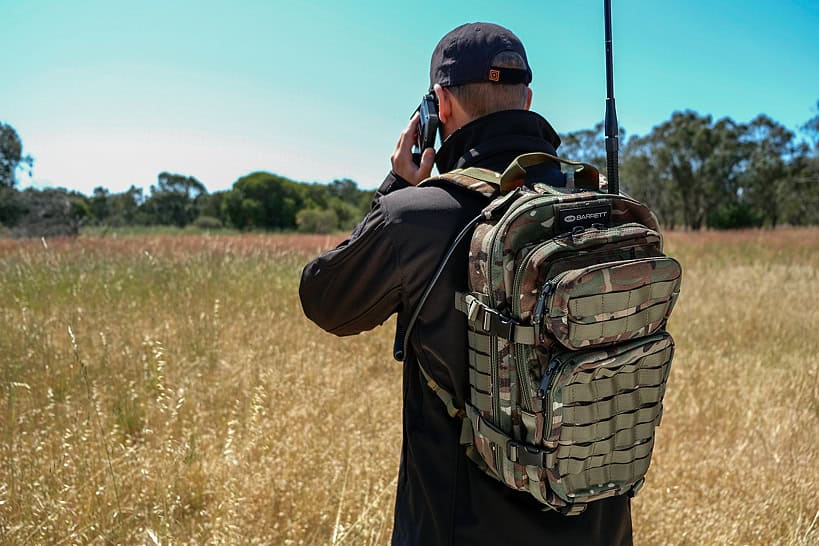
Cognitive Radio: Smart Solutions for Spectrum Congestion
The surge in demand for wireless communication has led to significant spectrum congestion. Cognitive radio technology offers a smart solution to this problem by intelligently identifying and switching to available channels, enhancing spectrum efficiency and mitigating congestion.
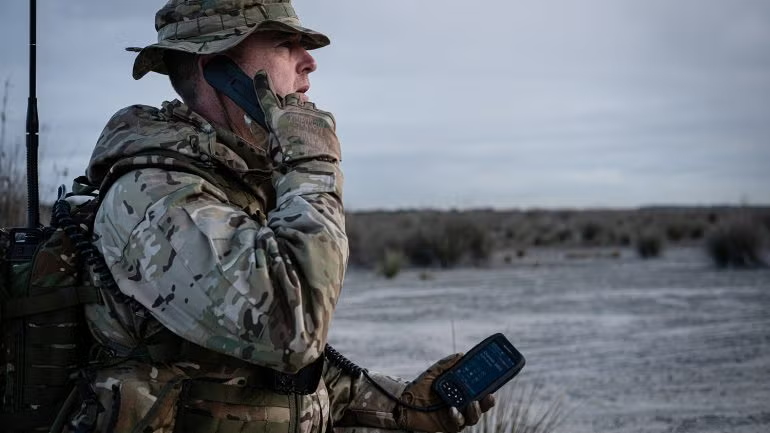
Eliminating empty zones: Why HF radio remains critical in remote desert areas
Securing reliable communications across vast desert areas that lack the necessary infrastructure can be complicated. In these so-called ‘empty zones’, which can extend for thousands of kilometres, alternative comms systems must be put in place to ensure vital personnel can remain in contact.
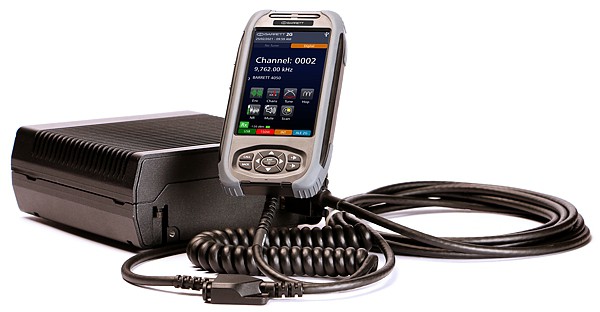
Advanced HF Radio Propagation Techniques: Mastering Long-Distance Communications
High-frequency (HF) radio wave propagation is crucial for long-distance communication.