
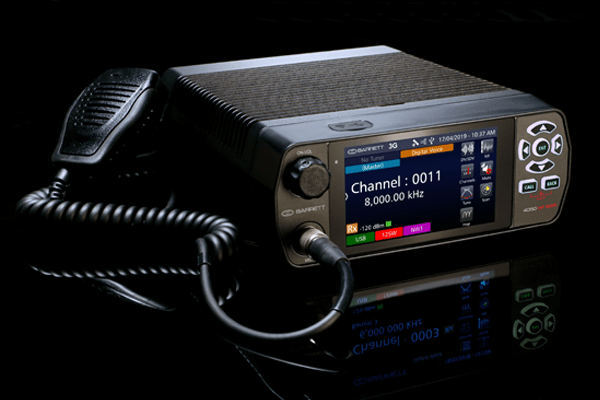
Why HF remains relevant
Why HF remains relevant
Some thought that mobile technology and satellite communications might spell a slow demise for High Frequency (HF) radio.
Yet it remains one of the most cost-effective, reliable and resilient forms of long-distance communication for multiple industries – and in times of national emergency or natural disaster. HF has been proven and is trusted as one of the most valuable communications tools available.
What is HF Used For?
HF radio remains an essential technology to support transport and public safety sectors as well as government initiatives and humanitarian efforts, including:
• Civil aviation
• National defence
• Safety services (police, fire and maritime)
• Search and rescue
• Reconnaissance
In all of these aspects, HF radio holds its own as a vital communication tool. Barrett Communications offers a wide range of HF radio equipment options for use in all terrains and verticals.
Advances in HF
Modern HF radio provides a range of advanced options, permitting voice and digital modulation for encryption of transmitted data. Units are familiar to veteran HF operators but can also be adapted for use by virtual newcomers to the field. The ability to bridge with other Software Defined Radio (SDR) systems provides for ease of communication between multiple teams or locations. HF substations in the field can communicate seamlessly with HQ by bridging with equipment in a static location or mounted in a mobile vehicle that is capable of visiting multiple sites for updates and instruction.

High-frequency radio signals can be immensely useful.
HF vs SatCom
Satellite communications are touted for their “advantages” over HF, but in recent years the gap has closed so much as to be virtually imperceptible. Satellite communications can become unstable or inoperable due to a wide range of factors, including space weather events which can disable or destroy, electronic equipment in orbit, need for communications at latitudes for SatCom is unreliable, or in mountainous regions where signals can become intermittent or nonexistent. While HF also has its challenges, they are typically much easier to surmount that the complex difficulties that accompany SatCom use.
HF as a Failsafe
Even when HF isn’t the first communications tool of choice, many organisations keep their equipment and operators ready to go to provide backup in case of satellite comms going down. It can be a vital part of plans involving maritime rescue or humanitarian efforts in remote areas. HF radio is currently a core component of most of Australia’s military communication and surveillance systems. Its systems are widely in use across the public sector as well, even if other comms methods are employed or deployed alongside it. HF radio not only remains relevant but will continue to do so for decades to come.
To learn more about HF radio options, contact the Barrett Communications team today.

Beyond the blackout: are power distributors underestimating the effectiveness of their backup communications?
When the power goes out, communication becomes everything.

Building a radio network for community-based environmental alerts
Learn how to build an HF radio network for community alerts. Explore emergency frequencies, training, and protocols to enhance disaster resilience

PACE comms strategy: Why HF radio is vital for emergency response
Choosing the right Primary, Alternate, Contingency, and Emergency (PACE) comms strategy is critical for improving the response to critical incidents.
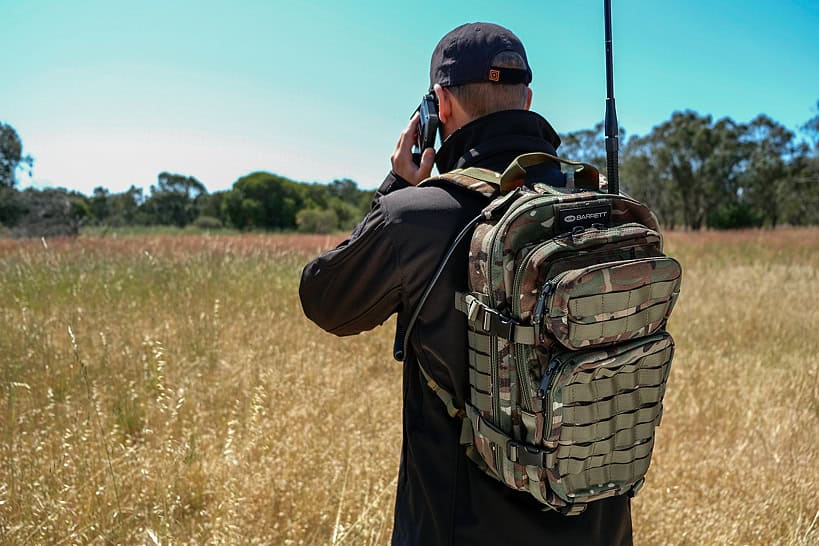
Cognitive Radio: Smart Solutions for Spectrum Congestion
The surge in demand for wireless communication has led to significant spectrum congestion. Cognitive radio technology offers a smart solution to this problem by intelligently identifying and switching to available channels, enhancing spectrum efficiency and mitigating congestion.
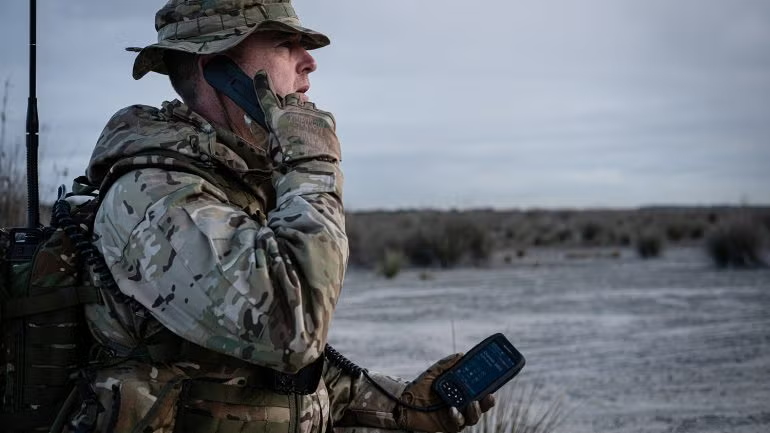
Eliminating empty zones: Why HF radio remains critical in remote desert areas
Securing reliable communications across vast desert areas that lack the necessary infrastructure can be complicated. In these so-called ‘empty zones’, which can extend for thousands of kilometres, alternative comms systems must be put in place to ensure vital personnel can remain in contact.
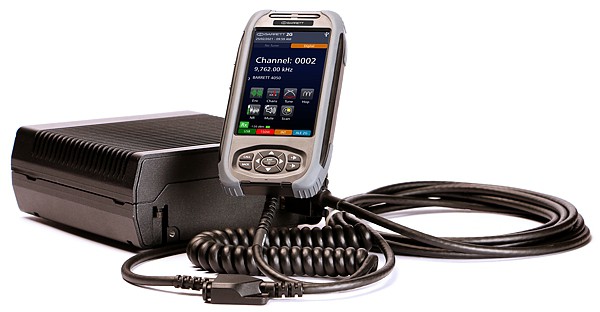
Advanced HF Radio Propagation Techniques: Mastering Long-Distance Communications
High-frequency (HF) radio wave propagation is crucial for long-distance communication.

Pingback: How is HF radio used in 2020? - Barrett Communications