
Radio Encryption: The Evolution
Radio Encryption: The Evolution
The theory behind using codes as a form of encryption is age-old. The ancient Spartans are known to have used a form of cryptography called a ‘scytale’ essentially a strip of paper wrapped around a baton. The paper was then unwound and appeared as a random list of letters unless wrapped around the same sized baton. This illustrates the fundamental aspect of encryption: only the sender and the receiver have knowledge of the specific ‘key’ that unlocks the message.
Jumping ahead to the age of wireless communications, very early radio voice transmissions were not very clear and the use of Morse code improved the likelihood of messages being correctly received and understood. As the popularity of wireless communications increased, so did concerns for security. Transmitting over the air, by way of broadcast, meant that messages could be easily intercepted and fall into unintended hands. So wireless transmitters turned to the age-old espionage tricks of codes and ciphers.
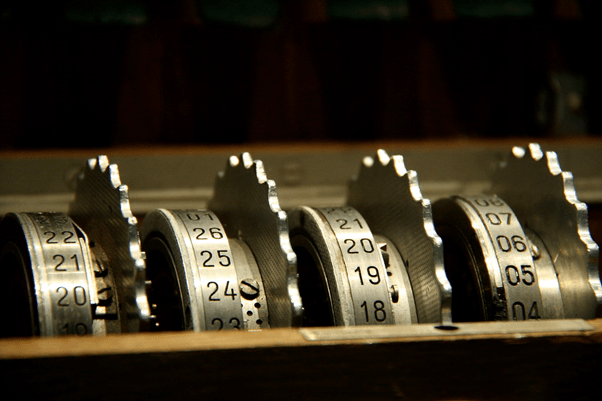
These codes evolved from simple substitution codes to single use code phrases with security measures and identification prefixing the message itself. These were all coded by operatives in the field who were under immense pressure. This meant that mistakes were bound to be made with messages sometimes needing to be repeatedly transmitted exposing field operatives for extended periods of time. This gave military opponents extra time to both break the cipher and catch undercover operatives. These operator codes were quickly replaced with mechanically generated encoding such as the German Enigma machine which significantly decreased the time operatives were in the open and decreased the chances of the codes being broken.
In the modern era, ciphers, codes and keys are generated digitally offering much higher levels of security. These keys – along with multiple other levels of encryption – combine to make encrypted voice over HF radio unintelligible to any listener without the correct key. The keys are now longer – 56 characters for DES-56 encryption or 256 characters for AES-256 encryption – and more complex, forming only one part of the encryption process.
Barrett Communications offers two tiers of encryption for their HF transceivers. The lower tier DES-56 encryption is non-export controlled and suitable for non-classified, time-critical information transfer e.g. orders that will become irrelevant in less than 24 hours.
The upper tier of encryption offered by Barrett is export-controlled US Federal Standard AES-256 encryption. This encryption offers greater security than DES-56 and is suitable for the transfer of classified information.
Both encryption tiers can be combined with Barrett’s Frequency Hopping option, significantly increasing the level of information security.

Beyond the blackout: are power distributors underestimating the effectiveness of their backup communications?
When the power goes out, communication becomes everything.

Building a radio network for community-based environmental alerts
Learn how to build an HF radio network for community alerts. Explore emergency frequencies, training, and protocols to enhance disaster resilience

PACE comms strategy: Why HF radio is vital for emergency response
Choosing the right Primary, Alternate, Contingency, and Emergency (PACE) comms strategy is critical for improving the response to critical incidents.
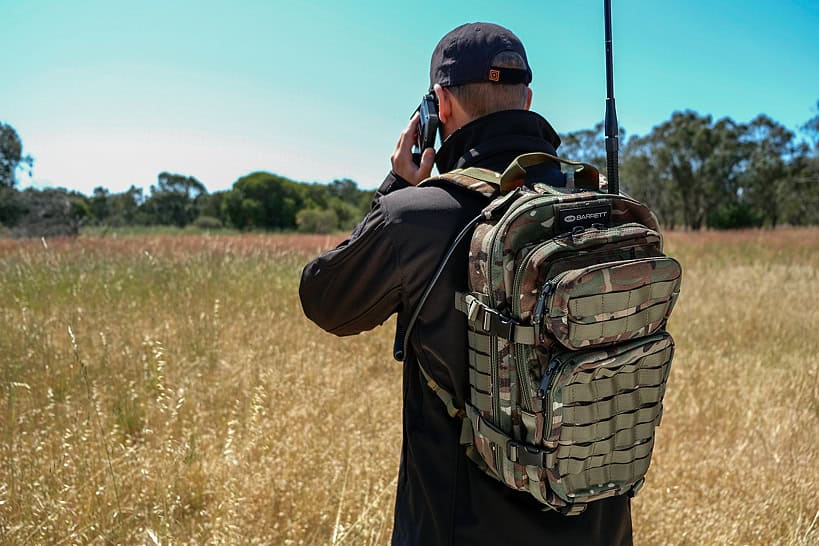
Cognitive Radio: Smart Solutions for Spectrum Congestion
The surge in demand for wireless communication has led to significant spectrum congestion. Cognitive radio technology offers a smart solution to this problem by intelligently identifying and switching to available channels, enhancing spectrum efficiency and mitigating congestion.
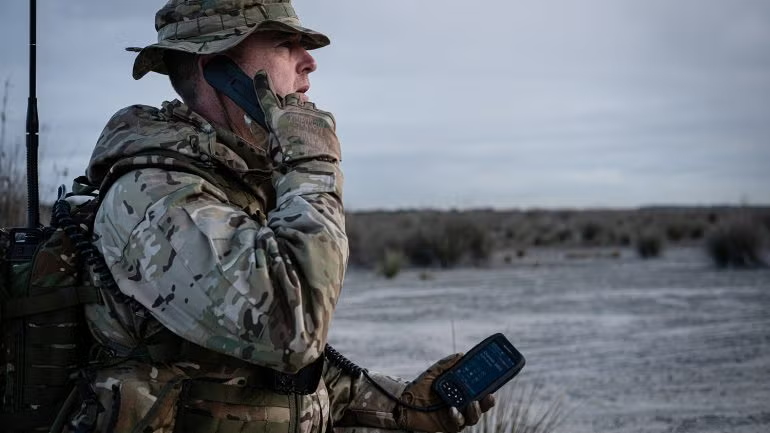
Eliminating empty zones: Why HF radio remains critical in remote desert areas
Securing reliable communications across vast desert areas that lack the necessary infrastructure can be complicated. In these so-called ‘empty zones’, which can extend for thousands of kilometres, alternative comms systems must be put in place to ensure vital personnel can remain in contact.
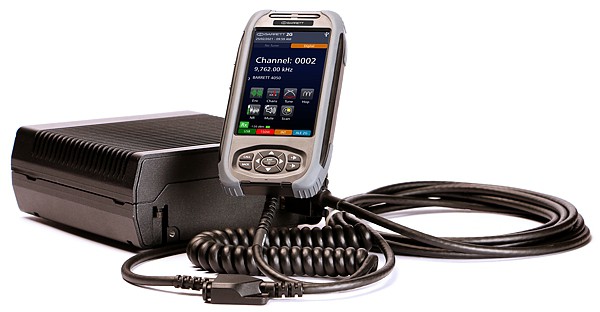
Advanced HF Radio Propagation Techniques: Mastering Long-Distance Communications
High-frequency (HF) radio wave propagation is crucial for long-distance communication.