

The role of HF radios in coordinating humanitarian aid
The role of HF radios in coordinating humanitarian aid
Learn how HF radios ensure reliable, secure communication in disaster zones, helping coordinate humanitarian aid and saving lives in remote areas.
Effective communication in crisis zones is critical to the success of humanitarian aid operations. Disasters frequently damage infrastructure, overload networks and disrupt power supplies — isolating impacted areas and hampering help delivery. HF (high-frequency) radios provide a critical solution to these challenges by enabling long-distance, secure communication without the need for local infrastructure or satellite linkages. Aid teams can use HF radios to coordinate seamlessly across long distances, ensuring that help reaches people in most need.
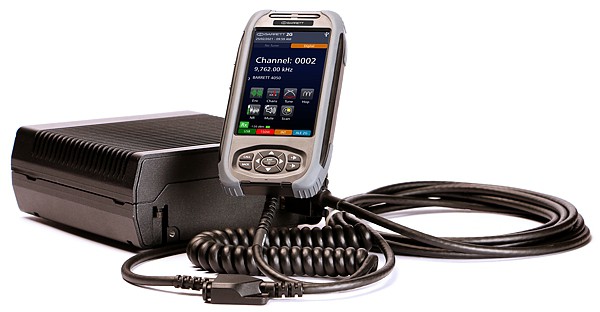
Barrett Communications is a reliable partner in humanitarian missions: We provide responders with HF equipment specifically tailored for harsh conditions.
How HF radios support aid coordination
HF radios enable long-distance communication by using ionospheric reflection — a process where radio waves bounce off the ionosphere, covering thousands of kilometres. This feature makes HF radios essential for connecting field teams with central coordination points, even in remote or hard-to-reach areas.
Clear and timely communication is vital to the success of any relief program. HF radios facilitate:
- Real-time updates between supply stations and distribution teams, enabling the timely delivery of commodities.
- Efficient cooperation between aid agencies and organisations.
- Field condition updates that keep teams informed about potential threats and changing scenarios.Barrett’s HF radios also provide greater security, which is vital in conflict zones and risky places.
Barrett’s encryption features keep critical information private, while frequency hopping — in which the broadcast frequency changes rapidly — makes interception almost impossible. These features ensure that communication lines remain secure, allowing teams to operate confidently.
Barrett’s HF radios in action
Barrett’s HF radios have proven essential in numerous humanitarian efforts. For example, after Hurricane Maria devastated Dominica, Barrett’s radios allowed for effective coordination of food and medical supply distribution across the island, ensuring that all villages received critical relief. Barrett’s HF radios also helped with rescue efforts after a mudslide in Patagonia, providing consistent communication across rough terrain and allowing rescue teams to coordinate actions efficiently.
These examples demonstrate how HF radios increase reaction times, keep all staff informed and protect aid workers and local residents. Barrett’s technology enables humanitarian teams to successfully navigate even the most difficult areas.
The importance of secure and reliable communication
In volatile regions, reliable interaction is crucial for the safety of aid employees and the performance of their missions. Barrett’s HF radios offer innate encryption to protect against unauthorised interception, making certain that sensitive details — such as locations and movement of staff — are secure. Frequency hopping further strengthens security, as it prevents predictable transmission patterns, rendering it extremely difficult for external parties to covertly listen in.
These safety precautions are indispensable in maintaining an uninterrupted flow of interaction, which is fundamental for coordinating complex, multi-agency relief efforts. By safeguarding communication routes, HF radios empower aid employees to work safely, deliver aid without delays and serve the impacted communities effectively. Secure correspondence is key, as lives can rely upon the apt exchange of significant intelligence. When every second counts, barriers to real-time coordination cannot be tolerated.
Conclusion
Barrett’s HF radios provide secure, long-range communication that can endure the harsh conditions of war and disaster zones, making them an indispensable tool for humanitarian relief coordination. When it comes to organisations committed to safe and successful humanitarian operations, Barrett’s solutions offer unrivalled security and reliability.
Contact us to learn more about HF technology solutions tailored to humanitarian missions.

Beyond the blackout: are power distributors underestimating the effectiveness of their backup communications?
When the power goes out, communication becomes everything.

Building a radio network for community-based environmental alerts
Learn how to build an HF radio network for community alerts. Explore emergency frequencies, training, and protocols to enhance disaster resilience

PACE comms strategy: Why HF radio is vital for emergency response
Choosing the right Primary, Alternate, Contingency, and Emergency (PACE) comms strategy is critical for improving the response to critical incidents.
Cognitive Radio: Smart Solutions for Spectrum Congestion
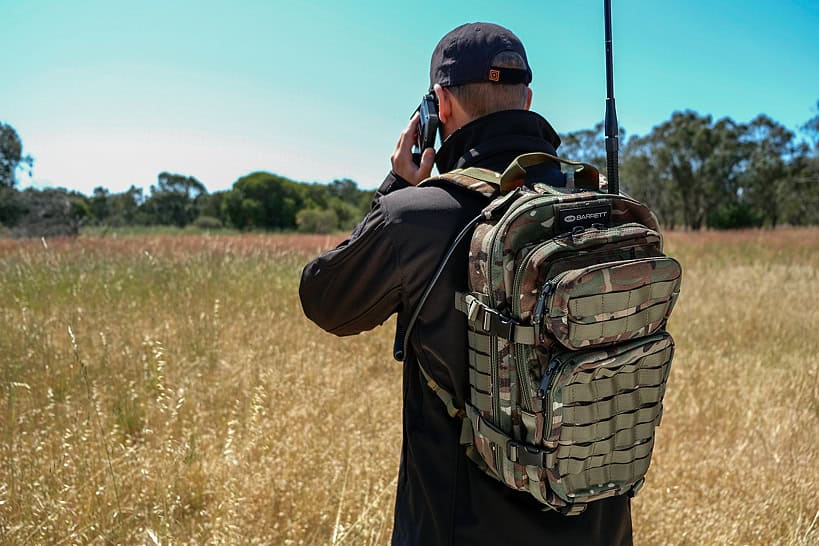
The surge in demand for wireless communication has led to significant spectrum congestion. Cognitive radio technology offers a smart solution to this problem by intelligently identifying and switching to available channels, enhancing spectrum efficiency and mitigating congestion.
Eliminating empty zones: Why HF radio remains critical in remote desert areas
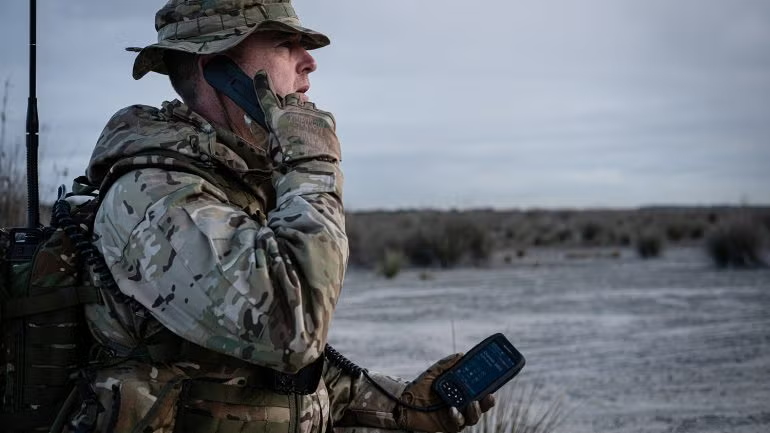
Securing reliable communications across vast desert areas that lack the necessary infrastructure can be complicated. In these so-called ‘empty zones’, which can extend for thousands of kilometres, alternative comms systems must be put in place to ensure vital personnel can remain in contact.
Advanced HF Radio Propagation Techniques: Mastering Long-Distance Communications
High-frequency (HF) radio wave propagation is crucial for long-distance communication.