
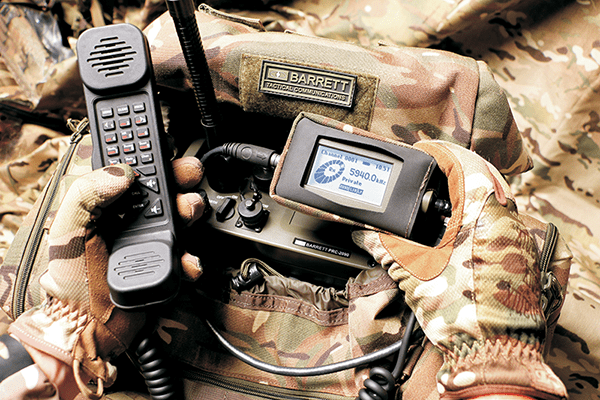
What separates commercial HF radios from tactical-grade equipment?
What separates commercial HF radios from tactical-grade equipment?
When people think of communications equipment, their first thought is usually digital devices such as mobile phones and tablets. However, stripping away all the accessories, the most important requirement for your device is reliability. If you can’t communicate accurately, your communications equipment isn’t worth much.
That’s why HF radio equipment is ideal for a variety of applications. Critical response organisations and humanitarians groups in the field need to know their radio equipment will be able to send and receive information accurately, regardless of conventional communications infrastructure or adverse weather conditions. Tactical operators also need this reliability – but their equipment needs to be further ruggedised to meet the demands of tactical field missions. So, what separates commercial HF radios from tactical equipment?

Three differences between commercial and tactical radio equipment
1) Tactical operators in the field very rarely know the full extent of challenges they may face during a mission – as such, their radio equipment needs to be able to resist a variety of extremes. High-quality radio devices should be able to meet operating temperatures as low as -30 degrees Celsius and as extreme as +70 degrees Celsius. Equipment should also be waterproof in case of rain or high humidity.
2) An extension to designing HF radio equipment that can stand up to anything is assembling a ruggedised exterior that’s tough but light. Tactical equipment should be meet military-grade standards for shock absorption while still remaining light enough for easy transport on foot or in a vehicle.
3) Tactical radio equipment needs to be flexible and integratable into a number of wider communications networks in the field. The best HF radio transceivers can be operated individually, as part of a ‘home base’ network connected to an antenna or mounted in a car for reliable communications on-the-go.

The difference in Barrett’s commercial and tactical HF equipment
Barrett Communications has been developing HF radio equipment for over 40 years, providing operators across numerous sectors with communications equipment for their application. Our commercial HF radio equipment is designed for peak performance and reliability, so our tactical devices simply rehouses this software in a ruggedised exterior.
The 2090 HF Manpack Transceiver for example, is built with automatic antenna tuning for optimised antenna matching, Digital Signal Processing (DSP) for background noise reduction and offers digital voice transmission for improved communications, even in bad propagation conditions.
Barrett’s PRC-2090 HF Tactical Manpack re-purposes all of these reliable communications solutions, adding a toughened transceiver exterior that’s shock absorptive and can resist extremes of temperature while retaining a lightweight design for easy portability. Other specialised devices like interoperability switches, interconnect, data modems and encryption units are also available for the tactical radio, making it a robust, functional and secure product for tactical deployments.
Toughness is ultimately the most important difference between commercial HF radio equipment and tactical equivalents – quality should be evident in every piece of HF radio equipment you invest in as standard.
For more information about Barrett’s line of HF radio solutions, contact the team today.

Beyond the blackout: are power distributors underestimating the effectiveness of their backup communications?
When the power goes out, communication becomes everything.

Building a radio network for community-based environmental alerts
Learn how to build an HF radio network for community alerts. Explore emergency frequencies, training, and protocols to enhance disaster resilience

PACE comms strategy: Why HF radio is vital for emergency response
Choosing the right Primary, Alternate, Contingency, and Emergency (PACE) comms strategy is critical for improving the response to critical incidents.
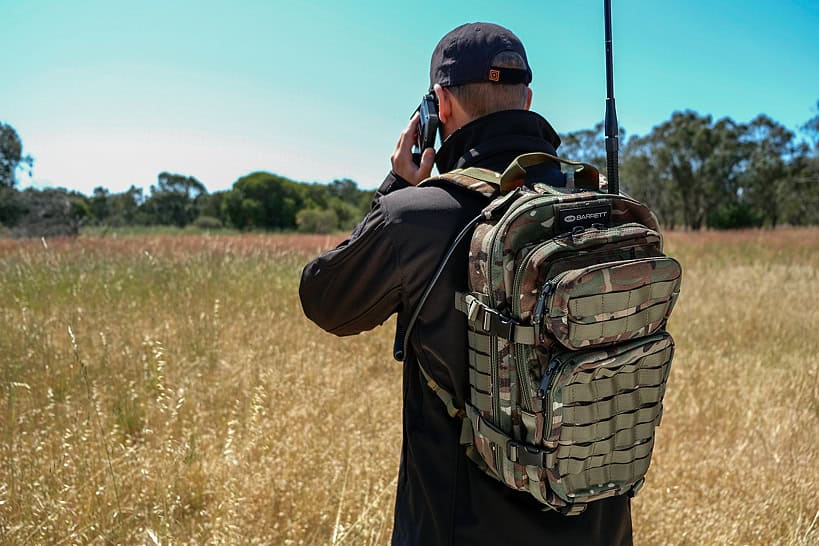
Cognitive Radio: Smart Solutions for Spectrum Congestion
The surge in demand for wireless communication has led to significant spectrum congestion. Cognitive radio technology offers a smart solution to this problem by intelligently identifying and switching to available channels, enhancing spectrum efficiency and mitigating congestion.
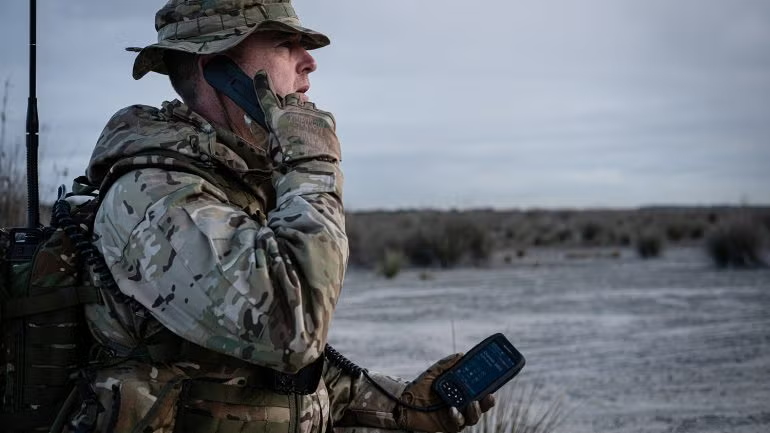
Eliminating empty zones: Why HF radio remains critical in remote desert areas
Securing reliable communications across vast desert areas that lack the necessary infrastructure can be complicated. In these so-called ‘empty zones’, which can extend for thousands of kilometres, alternative comms systems must be put in place to ensure vital personnel can remain in contact.
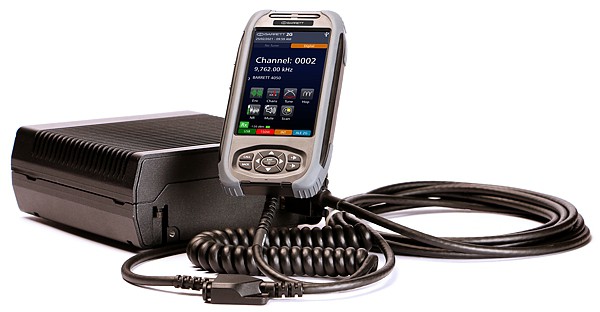
Advanced HF Radio Propagation Techniques: Mastering Long-Distance Communications
High-frequency (HF) radio wave propagation is crucial for long-distance communication.

Pingback: What makes tactical HF radios uniquely fit for purpose? - Barrett Communications