

A simple guide to interoperability between HF and VHF/UHF radio
A simple guide to interoperability between HF and VHF/UHF radio
The appeal of radio communications is its reliability, ease of use and lack of reliance on third party infrastructure. Where all other systems fail, HF and VHF/UHF radios are able to keep personnel in touch as standalone communications solutions.
However, key to this reliability is being able to seamlessly interface VHF/UHF communication with HF communication to provide vastly improved network capability for local and field-to-base connectivity.
In the field, operators can make contact over short line-of-sight distances using VHF/UHF radios. However, to reach out to a distant base several hundred kilometres away, HF radio communication is more suitable. The best radio equipment is equipped with interoperability technology to enable seamless communications. Bridging the VHF/UHF and the HF radio equipment forms a convenient network extension between local network and distant HF radio sites.

The importance of interoperability
HF radio transmissions are reflected by the ionosphere and ‘bounce back’ to Earth, enabling communications over vast distances. VHF/UHF signals, however, are restricted to line-of-sight propagation and can be affected by masses such as buildings or hill ranges, so are more suited to communications over shorter distances.
Making your communications equipment interoperable between HF and VHF/UHF radios is vital to critical field operations. Take the example of emergency services called in to control a bush fire – operators need to communicate with each other within distances ranging from line-of-sight up to several kilometres apart. However, they also need to be able to reach medical teams hundreds of kilometres outside the danger zone in case of injury. Additionally, critical respondents need to stay in touch with their operational base to receive up-to-date information that could aid them.
A simple way to make radio equipment interoperable
Making a HF radio network interoperate with a VHF/UHF radio network is simple when you partner with Barrett Communications. Our 2062 HF-V/UHF Crossgate device seamlessly integrates both radio networks transmissions using standard transceiver equipment, giving operators full interoperability on-the-go.
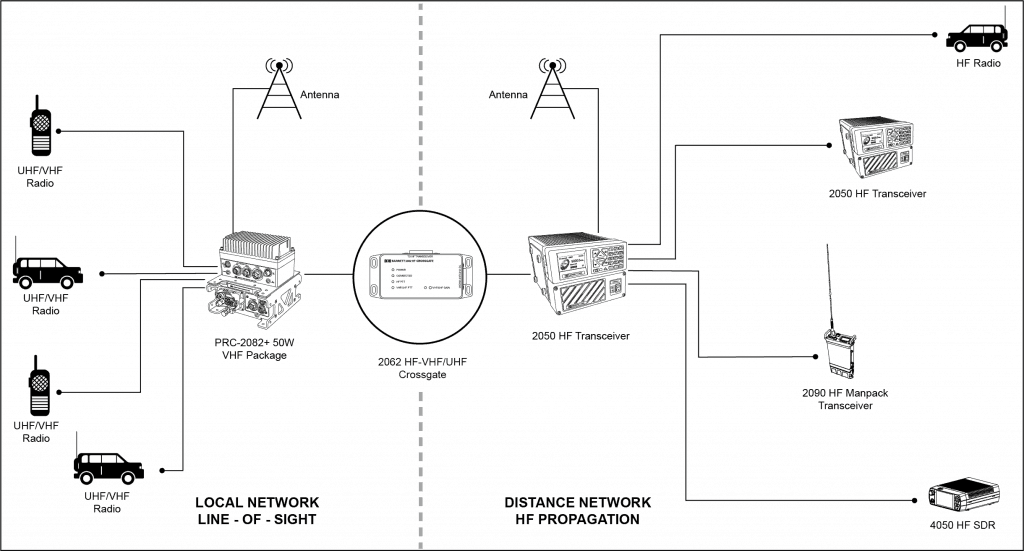
The 2062 Crossgate has a number of benefits that are essential in the field:
• The 2062 Crossgate is light and compact, making it an excellent device for installation within vehicles. All interoperability is achieved in this one compact solution, making it a cost-effective way of enabling interoperability in the field.
• Using a Selcall to link HF to VHF/UHF, and a DTMF sequence sent by a VHF/UHF network to connect to HF radio, the 2062 Crossgate is designed to give field operators control over network parameters like frequency selection and selective or group calling of distant radios whilst providing unaltered local VHF/UHF and HF networks.
• As with all Barrett radio equipment, it’s built to Australian standards and can operate in temperatures from -20 degrees Celsius up to +55 Celsius.
This guide covers the basics of interoperability between HF and VHF/UHF radio equipment – to find out more about interoperable radio devices or the 2062 Crossgate system, contact the Barrett team today.

Beyond the blackout: are power distributors underestimating the effectiveness of their backup communications?
When the power goes out, communication becomes everything.

Building a radio network for community-based environmental alerts
Learn how to build an HF radio network for community alerts. Explore emergency frequencies, training, and protocols to enhance disaster resilience

PACE comms strategy: Why HF radio is vital for emergency response
Choosing the right Primary, Alternate, Contingency, and Emergency (PACE) comms strategy is critical for improving the response to critical incidents.
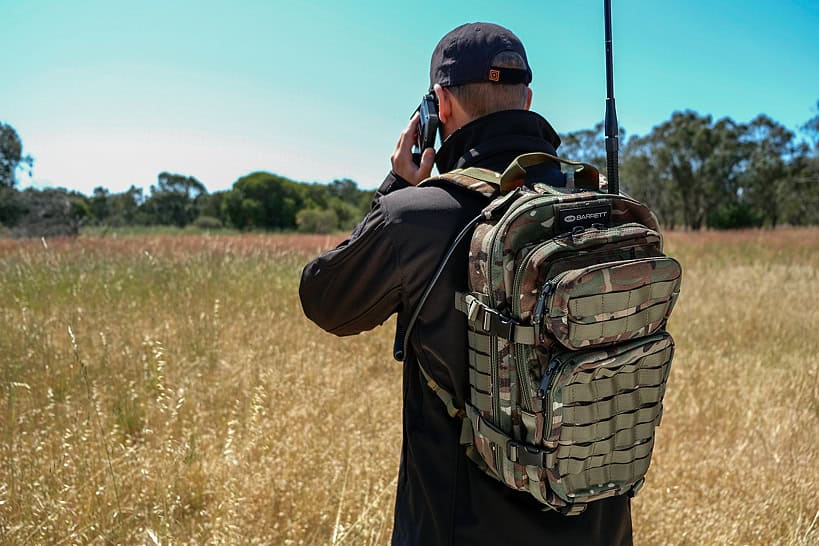
Cognitive Radio: Smart Solutions for Spectrum Congestion
The surge in demand for wireless communication has led to significant spectrum congestion. Cognitive radio technology offers a smart solution to this problem by intelligently identifying and switching to available channels, enhancing spectrum efficiency and mitigating congestion.
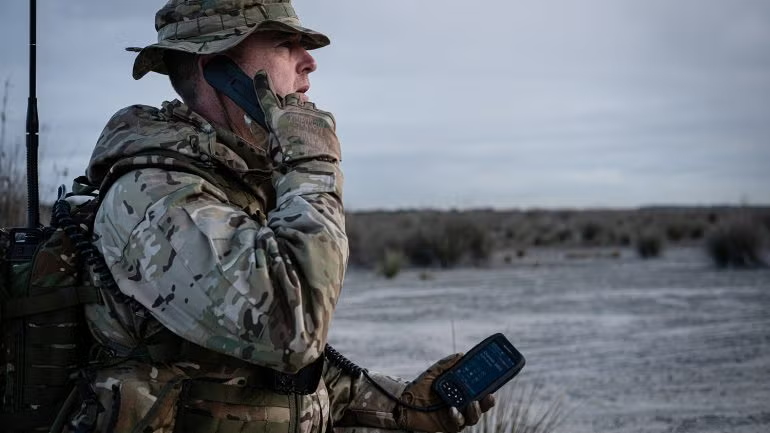
Eliminating empty zones: Why HF radio remains critical in remote desert areas
Securing reliable communications across vast desert areas that lack the necessary infrastructure can be complicated. In these so-called ‘empty zones’, which can extend for thousands of kilometres, alternative comms systems must be put in place to ensure vital personnel can remain in contact.
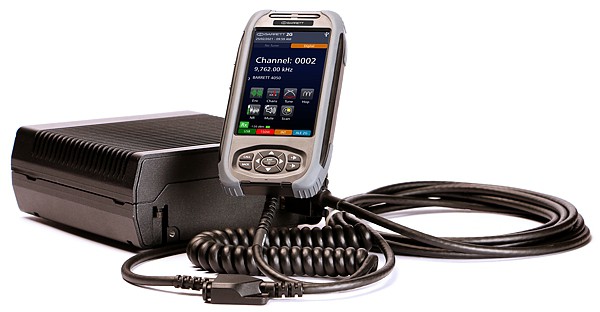
Advanced HF Radio Propagation Techniques: Mastering Long-Distance Communications
High-frequency (HF) radio wave propagation is crucial for long-distance communication.