
Has software-defined radio transformed critical response?
Has software-defined radio transformed critical response?
Software-defined radio, or SDR, technology holds the promise of significant benefits for critical response operations and public safety. SDR technology implementation can facilitate seamless interoperability in public safety communications, formerly limited by the incompatibility of various radio systems that operated on different frequency bands and/or utilised different protocols.
Remote reprogramming
Changing the configuration of a radio was formerly a costly and time-consuming operation, requiring the physical transportation of radio equipment to a central location, or a technician to make the trip to a radio in place. Now, software downloads and USB delivery significantly simplify this entire process, allowing operators to upgrade software to a new version or reprogram the channels on a radio at a remote site with minimal technical know-how. Critical response teams won’t be affected by their need to facilitate an upgrade, updates can be scheduled proactively or put off until an opportune moment, and there’s no appreciable downtime.
Self-adjustment
When SDR is embraced by critical response teams, there is significant potential for enabling cognitive applications, permitting a radio to adjust operating parameters automatically. This leads to improved performance, thanks to the ability to efficiently utilise the spectrum that enhances performance. This increases reliability and accuracy, giving in-the-field teams the tools they need to operate effectively.
Spectrum
The nature of critical response missions demands that the network be available for real-time communications transmissions at all times. Whether it is the ability to monitor active firefighter equipment status and biometrics during a building entry, quickly share information between police teams, or provide access to hazardous material information in an unfolding situation, the ability to integrate across devices and deliver immediate information on demand is key to improved communication.
Interoperability
Upgrading to new technology can be a specific challenge. If the technology is not backward compatible with existing radios and/or infrastructures, it can be virtually useless. Since SDR technology is now almost universally adopted, the main point of focus is ensuring that each new development is compatible with older equipment and also forward facing for interoperability with the next wave. Critical response in rural areas or developing countries can mean needing to be able to communicate with people and organisations that may not yet have the latest tech.
Life cycle costs
The cost of equipment for critical response teams can be a major factor in deciding what equipment is realistically possible on a tight budget. SDR is ideal for a wide range of critical comms uses, with the ability to adapt to evolving technologies and standards, the relative ease of training and deployment, and the reduction in costs associated with require modification and upgrading of equipment over its life cycle. The ability to future proof equipment alone has significant appeal to agencies and organisations seeking to make a high-quality long-term investment in SDR HF equipment.
Ease of operation
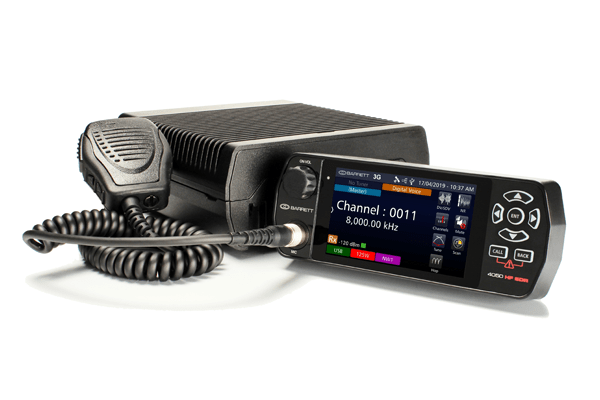
SDR technology can provide more seamless radio operation to end users. Barrett SDR HF equipment can be operated by users only tangentially familiar with the underlying tech. An intuitive, familiar touch screen interface similar to a tablet allows “swipe and tap” select and command functionality. This can simplify rapid training and make it possible during critical operations for even untrained personnel to quickly understand the basics in the field.
All of these factors confirm that SDR really has transformed critical response. For more information on Barrett Communications products for critical response teams, contact your closest location today.

Beyond the blackout: are power distributors underestimating the effectiveness of their backup communications?
When the power goes out, communication becomes everything.

Building a radio network for community-based environmental alerts
Learn how to build an HF radio network for community alerts. Explore emergency frequencies, training, and protocols to enhance disaster resilience

PACE comms strategy: Why HF radio is vital for emergency response
Choosing the right Primary, Alternate, Contingency, and Emergency (PACE) comms strategy is critical for improving the response to critical incidents.
Cognitive Radio: Smart Solutions for Spectrum Congestion
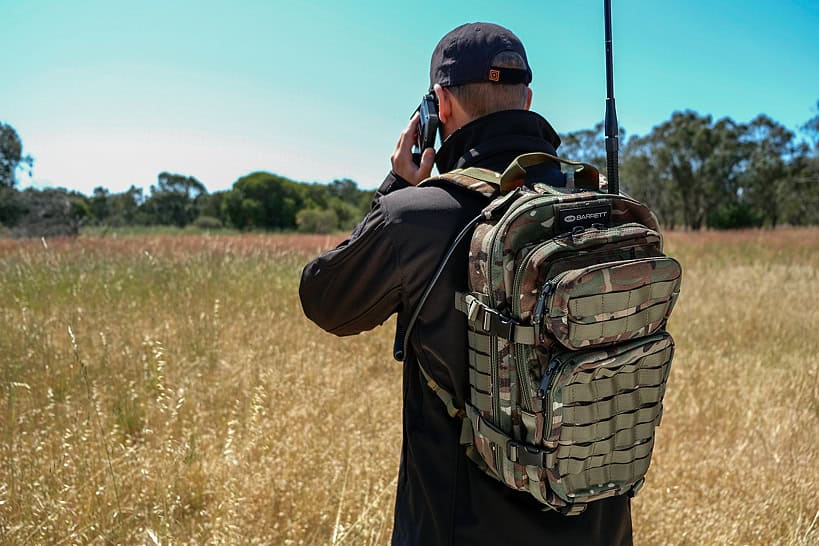
The surge in demand for wireless communication has led to significant spectrum congestion. Cognitive radio technology offers a smart solution to this problem by intelligently identifying and switching to available channels, enhancing spectrum efficiency and mitigating congestion.
Eliminating empty zones: Why HF radio remains critical in remote desert areas
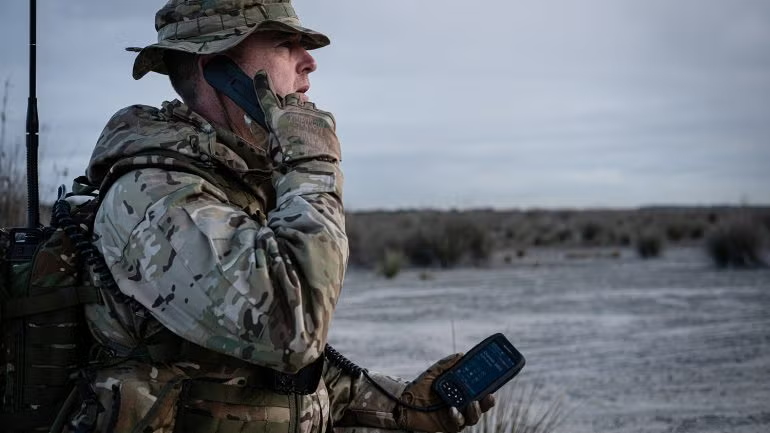
Securing reliable communications across vast desert areas that lack the necessary infrastructure can be complicated. In these so-called ‘empty zones’, which can extend for thousands of kilometres, alternative comms systems must be put in place to ensure vital personnel can remain in contact.
Advanced HF Radio Propagation Techniques: Mastering Long-Distance Communications
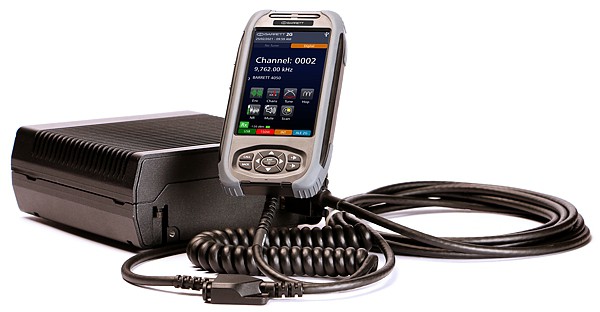
High-frequency (HF) radio wave propagation is crucial for long-distance communication.